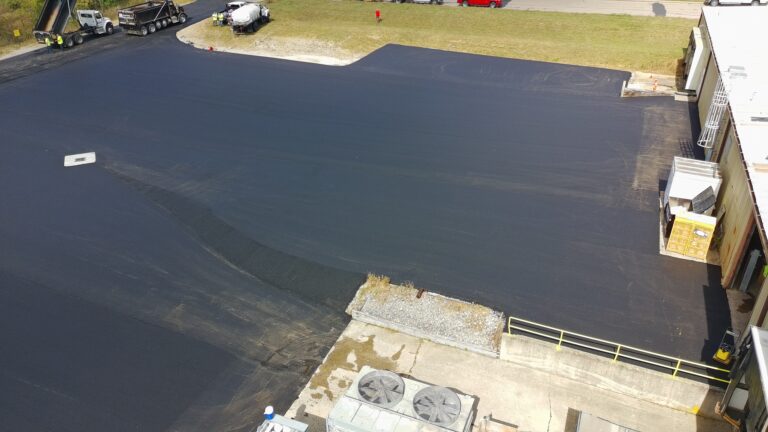
A driveway that sinks next to the garage is usually settling because the soil underneath was backfilled around the foundation and never fully compacted, or because roof and yard water keeps softening it. The lasting fix is to remove the sunken section, rebuild the base with compacted stone, correct the drainage, and repave or replace the slab, rather than simply adding material on top.
This is a common driveway complaint, and it often shows up on homes that have been standing for many years, not just new ones. The good news is that the problem is usually limited to a strip near the house, and it can be repaired without replacing the whole driveway.
Why the Area Next to the Garage Sinks
When a house is built, the builder digs out an area larger than the foundation so crews can work around the walls. After the foundation is in, that gap is filled back in with soil. If the backfill is not compacted well in layers, it keeps settling for years, and the driveway sitting on top of it settles too.
That is why the dip so often shows up in a band right along the garage, while the rest of the driveway stays level. Our article on residential asphalt installation for new homes explains why proper compaction matters so much on new construction.
Water from the roof and gutters
Downspouts at the front corners of a garage often dump water right at the edge of the driveway. That water soaks into the backfill, softens it and washes fine soil away, which speeds up settling. In Ohio’s freeze-thaw cycles, saturated soil also heaves and shifts through the winter.
Utility lines and old trenches
Water, sewer, gas and electric lines often enter the house near the garage. If those trenches were not backfilled carefully, they can settle in a narrow line across the driveway. See our article on why utility cuts and trenches become weak points in asphalt pavement for more on this.
Signs the Problem Is Getting Worse
A small dip may not seem urgent, but sunken areas tend to grow because they collect water. Watch for these signs:
- A lip or step between the driveway and the garage floor that catches tires or toes
- Water pooling at the garage door after rain
- Ice forming in the low spot through the winter
- Cracks running parallel to the garage, or a web of cracks in the low area
- Water getting into the garage or along the foundation
Water against the foundation is the biggest concern, since it can lead to damp basements and other problems. If you also notice cracks in the foundation walls or garage slab, have a qualified professional look at the structure as well.
Repair Options for an Asphalt Driveway
The right repair depends on how deep the settlement is and whether the soil has stopped moving. A contractor will usually check the area, look at drainage and recommend one of these approaches.
Remove and rebuild the section
For most sunken areas, the dependable repair is to saw cut the asphalt around the low spot, remove it, dig out soft or unstable soil, and replace it with crushed stone compacted in layers. New hot mix is then placed and compacted so it meets the garage slab and the surrounding driveway at the right height and slope. The seams are sealed to keep water out.
Overlay or leveling course
If the dip is shallow and the base is stable, a leveling layer of asphalt can sometimes bring the area back up. This is only a good choice when the settling has stopped. Building up the surface over soil that is still moving just puts the problem off.
Whole driveway replacement
If the rest of the driveway is also worn out, cracked or poorly drained, it may make more sense to replace the whole thing and fix the garage area as part of the job. A new residential asphalt driveway lets the contractor address grading and base from end to end.
When the Section Is Concrete
Many homes have a concrete apron in front of the garage, with asphalt running out to the street. If the concrete slab has sunk, it can be replaced with a new slab poured over a properly prepared and compacted base. Lifting a slab is another option that some contractors offer when the concrete is in good condition. Our concrete team can look at the slab and the asphalt together so the two surfaces meet cleanly when the work is done.
Fix the Drainage at the Same Time
Repairing the surface without dealing with water is the most common reason a sunken area comes back. Before or during the repair, consider:
- Extending downspouts so they discharge away from the driveway and foundation, or tying them into an underground line
- Shaping the repaired area so water flows away from the garage door
- Adding a trench drain across the front of the garage if the driveway slopes toward the house
- Sealing the joint between the driveway and the garage slab to keep water from running down along the foundation
Our drainage and site preparation services cover regrading, drains and base work for problems like this.
When to Schedule the Repair
Asphalt repairs use hot mix, which is available in our region from about mid-April through early December, weather permitting. Concrete work also depends on suitable temperatures. If you notice a sunken area during the winter, extend the downspouts and keep water moving away from the garage, then plan the repair for spring. Fall is also a good time to have the area looked at so you can get on the schedule early.
Frequently Asked Questions
Can I just fill the low spot with cold patch?
Cold patch can smooth a small dip temporarily, but it does not fix the soft soil underneath and tends to loosen over time. It is a stopgap, not a repair.
Why does only the part next to the garage sink?
That strip usually sits over backfilled soil around the foundation, which settles more than the undisturbed ground under the rest of the driveway.
Will the area sink again after it is repaired?
Not if the soft material is removed, the new base is compacted properly, and drainage is corrected. Skipping any of those steps raises the chance of it coming back.
Do I need to replace the whole driveway?
Usually not. Most sunken garage areas can be repaired as a section. Full replacement makes sense when the rest of the driveway is also failing.
Vandalia Blacktop & Sealcoating has repaired driveways for homeowners in Vandalia, Huber Heights and across the Miami Valley since 1975. If the area by your garage is sinking or holding water, contact us or call (937) 454-0571 to schedule an evaluation.