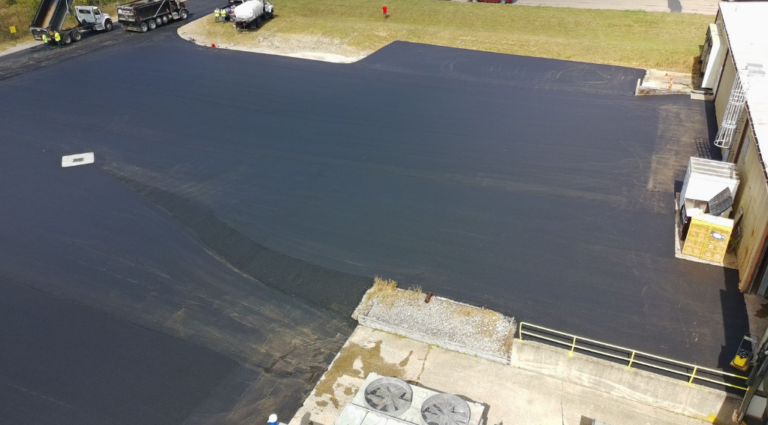
A gravel equipment yard or trailer lot is ready for asphalt when you are regrading and adding stone every year, when ruts and standing water slow down daily work, or when dust and mud start causing problems for equipment, neighbors or customers. If the yard handles steady truck traffic and you plan to stay on the property for years, paving over a properly prepared base usually pays off in lower upkeep and fewer headaches.
Gravel is a reasonable starting point for a new yard. It is quick to install, it drains through the surface, and it tolerates heavy loads without much fuss. The trouble is that gravel never stays put. Every turn of a loaded trailer pushes stone aside, and every heavy rain carries fines away.
Signs Your Gravel Yard Has Outgrown Itself
The decision to pave usually builds over several seasons as the same problems keep coming back. These patterns tell you gravel is costing more than it saves.
- Constant regrading. If someone is out with a skid steer or box blade every few months to knock down ridges and fill holes, that labor adds up.
- Stone deliveries every year. Gravel migrates into the grass, gets tracked onto the road and sinks into soft spots. Replacing it is a recurring expense with no end date.
- Deep ruts at the gate and turning areas. The places where trailers swing and stop take the most abuse, and they are usually the first to turn into mud.
- Standing water after rain. Once the gravel layer is compacted and mixed with clay, it stops draining and starts holding puddles.
- Dust complaints. In dry summer weeks, a busy gravel yard can throw dust onto parked equipment, nearby buildings and neighboring properties.
- Mud on the public road. Trucks leaving a wet yard can track mud onto the street, which can draw attention from the city or township.
If three or four of these sound familiar, it is worth getting a pavement assessment before you order another load of stone.
What Changes When You Pave
Asphalt gives you a firm, consistent surface that does not shift under turning tires. Equipment parks level, trailers hitch on stable ground, and forklifts or loaders roll without bogging down. That alone can make daily operations smoother.
Paving also gives you control over water. A paved yard is graded to move runoff toward planned outlets instead of letting it soak into soft spots. Less water in the base means fewer potholes and fewer weak areas over time.
Lanes and storage rows can be striped, snow plowing gets easier with no loose stone to scrape up, and equipment stays cleaner.
Asphalt is not maintenance free. It needs crack sealing, occasional sealcoating and prompt repairs. But that upkeep is predictable, and it is far less frequent than reworking gravel.
The Base Matters More Than the Surface
Equipment yards and trailer lots carry loads that would destroy a typical residential driveway. Loaded trailers, dump trucks, tractors and tracked machines all concentrate weight in small areas. The asphalt layer only performs if the ground beneath it can carry that weight.
An existing gravel yard often has a head start, since years of compacted stone can become part of the new base once it is evaluated. A contractor will look for areas where clay has mixed into the stone, where soft subgrade is pumping up, or where drainage has failed. Those spots need to be dug out and rebuilt before paving.
On poorly draining soils, soil stabilization can firm up the subgrade so it supports heavy traffic. Our drainage and site preparation work covers grading, base correction and stabilization ahead of paving. For a deeper look at why this step decides how long pavement lasts, read the importance of proper subgrade preparation before any paving project.
Planning for Heavy Loads and Tight Turns
A trailer lot is not a parking lot for cars, and it should not be designed like one. Before any asphalt goes down, think through how the yard really works on a busy day.
Map Your Traffic
Walk the property and note where trucks enter, where they turn, where trailers are dropped and where equipment sits for long periods. These zones usually need a thicker pavement section than the quieter edges of the yard.
Watch the Parking Points
Trailer landing gear and equipment outriggers press a lot of weight into a small footprint. On hot summer days, that can dent fresh asphalt. Many owners use concrete pads or sand shoes in these spots. If you have a dedicated drop zone, a concrete pad may be worth considering for that area.
Allow Room to Swing
Tight turns with long trailers scuff and twist the surface. Wider radii at the gate and in the main aisle reduce that stress and make the yard easier to use.
Timing the Upgrade
New paving in the Miami Valley happens during the hot mix season, roughly mid-April through early December, weather permitting. Asphalt plants in the region close from about mid-December to mid-April, so winter is the time to plan rather than pave.
Many yard owners use the slower months to get estimates, set a budget and line up a spot on the schedule. That way the work can start in spring before the busiest stretch of the year. If your yard sits along an industrial corridor near Vandalia or north Dayton, plan around your own peak season so the project does not interrupt deliveries.
Phasing the job, one section at a time, can keep part of the yard open while the rest is paved.
Is Gravel Still the Right Choice for Part of the Yard?
Paving does not have to be all or nothing. Some owners pave the entrance, main drive aisle and active work zones while leaving back storage rows in gravel. This puts asphalt where traffic is heaviest and the payoff is greatest.
This approach also suits properties on long rural parcels near Troy or Tipp City, where a full-acreage paving job may not make sense. The same logic applies to long driveways, which we cover in the benefits of asphalt over gravel for long rural driveways.
Our commercial asphalt paving team can lay out options in phases so you can spread the work over more than one season.
Frequently Asked Questions
Can you pave directly over an existing gravel yard?
Sometimes the existing stone can serve as part of the base, but it has to be evaluated, regraded and compacted first. Areas with mud, clay contamination or soft subgrade need to be removed and rebuilt before paving.
Will asphalt hold up to heavy trucks and equipment?
Yes, when the base and pavement thickness are designed for the loads. Heavy traffic areas need a stronger section than light parking areas, and the contractor should ask about your equipment before quoting.
What maintenance does a paved yard need?
Plan on regular crack sealing, sealcoating on a schedule that fits your traffic, and quick repairs when damage appears. Keeping water drained away from the pavement is just as important.
When should I get an estimate?
Fall and winter are good times to get estimates and plan, since new paving is done between mid-April and early December. Booking early helps secure a spring start.
If your gravel yard is eating up time and stone every season, it may be time to look at a better surface. Vandalia Blacktop & Sealcoating has served Miami Valley businesses since 1975, and we can evaluate your yard, talk through phasing and give you a clear plan. Call (937) 454-0571 or contact us to schedule a site visit.