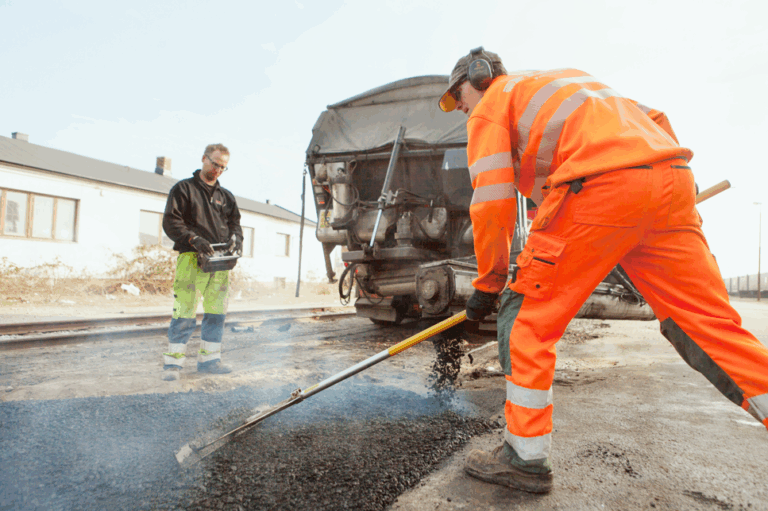
Most new asphalt driveways can handle foot traffic after about a day and passenger cars after roughly three days, but heavier vehicles should stay off for a week or more. Hot weather stretches those timelines, because fresh asphalt stays soft longer when the sun keeps heating it.
Those numbers are a starting point, not a promise. The thickness of the asphalt, the weather in the days after paving and the way you use the driveway all play a part. Your paving contractor should give you specific guidance for your job before the crew pulls away.
Why Fresh Asphalt Needs Time Before Traffic
Hot mix asphalt is a blend of stone, sand and liquid asphalt binder. It goes down hot, gets compacted with a roller and then cools and stiffens over the following days. It feels solid within hours, but it is still pliable underneath.
While the binder is soft, weight that sits in one place or twists against the surface can leave a mark. A tire turning in place, a kickstand or a heavy pot on the edge can press right into it. Once the asphalt hardens, those dents and scuffs become permanent.
Full curing takes much longer than the first few days. Fresh asphalt continues to harden over several months as lighter oils in the binder work their way out. That is why the first season calls for a little extra care even after you are driving on it normally.
A Practical Timeline for a New Driveway
Here is a general schedule that works for most residential driveways in the Miami Valley. Adjust it based on the weather and what your contractor tells you.
- First 24 hours: Keep everyone off, including people, pets and bikes. Rope off the entrance or set out cones so delivery drivers and visitors do not wander onto it.
- Days two and three: Light foot traffic is usually fine. Avoid dragging trash cans, coolers or anything with small wheels across the surface.
- Around day three: Most passenger cars and small SUVs can start using the driveway. Drive straight in and straight out at low speed.
- First week or two: Keep larger pickups, trailers and anything towing a load off the driveway when possible. Park in a slightly different spot each day.
- First several months: Treat the edges gently, avoid heavy point loads and keep large equipment off entirely.
If you are planning a move, a big delivery or a home project, mention it before the driveway is paved. It is much easier to schedule around a moving truck than to fix the ruts it can leave behind.
How Heat and Weather Change the Wait
Summer heat is the biggest variable. On a hot July afternoon in Vandalia, dark asphalt can get far hotter than the air temperature, and soft pavement marks more easily. During heat waves it is smart to add a day or two to every step of the timeline.
Cooler weather has the opposite effect. Asphalt laid in late spring or early fall firms up faster, so you may be able to drive on it sooner. Rain does not hurt fresh hot mix the way it would hurt wet concrete, but it is still best to let the surface cool and settle before traffic starts.
Some homeowners like to hose down a new driveway on very hot days to cool the surface. A light spray in the afternoon can help reduce softening. Skip it if your contractor advises against it for your particular job.
Habits That Prevent Early Damage
Most early damage on new driveways comes from a few common habits. A few small changes in the first months go a long way.
Turning the Wheel While Parked
Turning your steering wheel while the car is not moving is called dry steering. On soft asphalt, it twists the tire against the surface and leaves a scuff. Get the car rolling before you turn the wheel.
Point Loads and Sharp Objects
Motorcycle and bike kickstands, trailer jacks, ladders and lawn chairs concentrate a lot of weight on a small spot. Put a flat piece of plywood under anything like that for the first few months. The same goes for car ramps and jack stands.
Driving Over the Edges
The edges of a driveway have less support than the middle, especially where they meet grass or soil. Driving off the side or parking with tires on the edge can crack and crumble it. Backfilling the edges with soil and seeding them helps support the asphalt over time.
Spilled Fluids
Gasoline, oil and other petroleum products soften asphalt binder. That damage is worse on new pavement. Watch for leaks and clean spills promptly.
When Heavy Vehicles Are Unavoidable
Sometimes you cannot keep heavy trucks away. A roofing project, a dumpster drop-off or a fuel delivery might already be on the calendar. In those cases, a little planning protects your investment.
- Ask the driver to stay on the center of the driveway and avoid turning while stopped.
- Lay plywood sheets where dumpster rails or outriggers will rest.
- Schedule the visit during a cooler part of the day if you can.
- Park heavy equipment on the street or a gravel area instead of the new surface.
We cover more of this in our article on what happens when construction equipment uses a residential asphalt driveway. If you see light tire marks in the first summer, our post on why new asphalt develops tire marks and surface scuffs during hot weather explains what is normal and what is not.
Planning Ahead for Sealcoating
New asphalt should not be sealcoated right away. The surface needs time to cure, and sealing too early can trap the oils that need to escape. Many contractors recommend waiting several months, often until the following warm season, before the first coat.
When the time comes, professional sealcoating helps protect the surface from sun, water and fluid spills. Sealcoating needs dry pavement, no rain expected for about a day and temperatures around 50 degrees and rising, which in Ohio usually means late spring through early fall.
If you are still planning your project, our residential asphalt driveway team can walk you through timing and aftercare before work begins. Knowing what to expect makes those first few days much easier.
Frequently Asked Questions
Can I walk on my new asphalt driveway the same day?
It is best to wait about 24 hours. The surface may feel firm, but shoes, pet claws and bike tires can still leave marks while it is warm.
How long before I can park my car on new asphalt?
Most passenger vehicles can use a new driveway after about three days. In hot weather, wait a bit longer and avoid parking in the same spot every day for the first few weeks.
Will rain hurt my brand new driveway?
Rain generally does not damage freshly laid hot mix asphalt. Water cools the surface, and the asphalt is not mixed with water the way concrete is. Still, give it time to cool and set before driving on it.
Is it normal for new asphalt to look a little uneven in color?
Yes, some variation in color and texture is normal on new pavement. The surface will even out as it cures and weathers over the first season.
Vandalia Blacktop & Sealcoating has been paving driveways across Dayton and the Miami Valley since 1975, and we are happy to answer aftercare questions for any new driveway. Call us at (937) 454-0571 or contact us online to talk about your driveway project.