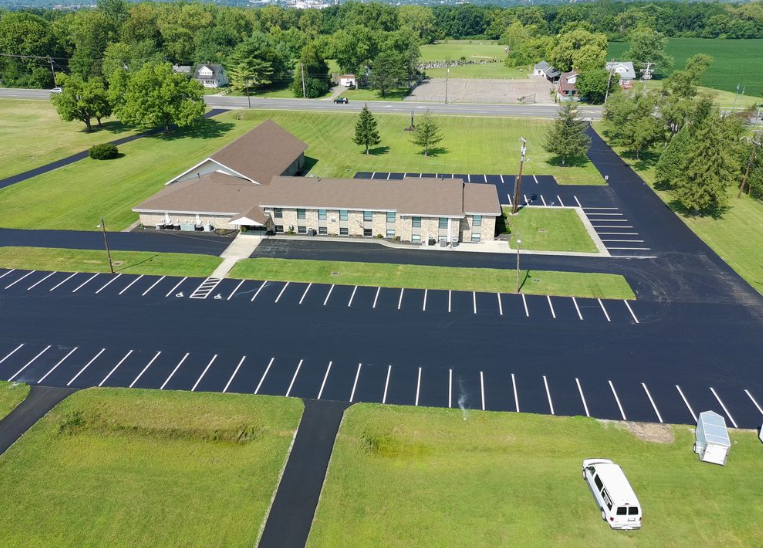
To prepare your property for paving day, clear vehicles and belongings off the work area, mark sprinkler heads and buried lines, confirm access for trucks, turn off irrigation, and let everyone who uses the pavement know when it will be closed. A little preparation in the days before the crew arrives keeps the job on schedule and protects your property.
Paving moves fast once it starts. Trucks arrive with hot mix that has to be placed while it is still hot, so there is little time to stop and move a trailer or find a hidden valve box. This checklist covers what homeowners, property managers and business owners should handle ahead of time.
One to Two Weeks Before: Plan and Communicate
Good paving days start with a clear plan. Before the date is set, walk the site with your contractor and confirm the scope, the work limits and how traffic will be handled.
- Confirm the schedule and a rain plan. Paving depends on weather. Ask how you will be notified if the date moves.
- Ask about phasing. Large lots are often paved in sections so part of the property stays open. Make sure you know which areas close and when.
- Notify the people who use the pavement. Tenants, residents, employees, customers, delivery drivers and trash haulers all need advance notice. Post signs, send emails and put notices on doors.
- Reschedule deliveries and pickups. Garbage trucks, moving vans and freight deliveries should not be on fresh pavement. Move them to a day before paving or well after.
- Check permits and approvals. Some driveway apron work or curb cuts may require approval from your city or township. Your contractor can tell you what is typical, but confirm requirements locally.
Apartment communities and HOAs have more people to reach and more moving parts. Our article on preparing apartment communities for large capital asphalt projects covers resident communication in more depth.
A Few Days Before: Mark What the Crew Cannot See
Crews and equipment work close to edges, lawns and utilities. Anything hidden or easy to miss should be marked clearly.
- Sprinkler heads and irrigation lines near the pavement edge. Flag them so they are not crushed by trucks or rollers.
- Private buried lines such as invisible dog fences, outdoor lighting wires and low-voltage cables. Public utility locate services generally do not mark private lines, so you may need to mark them yourself.
- Septic tanks, drain fields and cleanouts. Heavy trucks should not drive over these.
- Valve boxes, manholes and catch basins within the paving area, so they can be adjusted to the new surface height.
If your project involves digging, such as base repair or drainage work, the contractor will typically arrange utility locates. Ask to confirm this has been done before the work date.
The Day Before: Clear the Area
The work zone needs to be completely empty. Anything left in place either slows the crew down or ends up in the way of hot asphalt.
- Move all vehicles, trailers, boats and campers off the pavement and park them somewhere they can leave from without crossing the work area.
- Remove basketball hoops, planters, trash cans, recycling bins, mats and decorations.
- Pull back overhanging branches or shrubs that could block trucks or the paver.
- Turn off irrigation timers so sprinklers do not soak the base or the fresh mat.
- Close garage doors and gates that open over the paving area.
For businesses, block off the area after closing so customers do not park in it overnight. Cones, tape or barricades work well.
Paving Day: Stay Clear and Stay Reachable
Keep People and Pets Back
Hot asphalt, moving trucks and vibrating rollers are not safe for spectators. Keep children and pets indoors or well away from the work. Shoes and paws can also leave prints in a fresh mat.
Be Available for Questions
Crews sometimes find something unexpected, like a soft spot in the base or a buried object. Make sure someone with authority to make decisions can be reached by phone during the job.
Expect Some Noise and Odor
Paving equipment is loud, and hot mix has a distinct smell. Both fade once the work is done. Let neighbors know ahead of time, especially in close residential areas around Kettering or Centerville.
After the Crew Leaves: Protect the New Surface
Fresh asphalt needs time to cool and firm up before it carries traffic. Your contractor will tell you how long to stay off, and that guidance depends on temperature and the type of job.
- Keep cars off until the contractor says it is ready. Hot summer days may require extra patience.
- Avoid sharp turns with the steering wheel while parked, which can scuff a soft surface.
- Keep kickstands, trailer jacks and ramps off the new pavement for a while, or set them on a board.
- Do not let heavy trucks on the edges, which are the most vulnerable part of a new driveway.
- Turn irrigation back on once the contractor gives the go-ahead.
For commercial lots, striping usually follows once the asphalt has cured enough. Ask about scheduling parking lot striping as part of the overall plan.
Frequently Asked Questions
Do I need to be home on paving day?
Not always, but someone should be reachable by phone in case the crew has a question or finds an issue that needs a decision.
What happens if it rains on paving day?
The contractor will typically reschedule. Hot mix should not be placed on a wet base or in active rain, so expect a call if the forecast turns.
Can a business stay open during paving?
Often, yes, by paving in phases and keeping an entrance open. Plan the sequence with your contractor ahead of time.
When is paving season in the Miami Valley?
New paving runs roughly mid-April through early December, weather permitting, because regional asphalt plants close for the winter.
A smooth paving day starts with a contractor who explains the plan clearly. Vandalia Blacktop & Sealcoating has paved residential driveways and commercial lots across the Miami Valley since 1975. Call (937) 454-0571 or contact us to talk about your project and what to expect.