Planning pavement and striping for EV charging spaces means deciding where the chargers go, how power reaches them, and how the spaces will be protected and marked, before any asphalt is cut or paint goes down. The smartest projects coordinate the electrical work with paving, concrete and striping so the lot is only torn up once.
More residents, employees and customers are driving electric vehicles, and property owners across the Miami Valley are adding chargers to apartment communities, offices and retail lots. The charger gets the attention, but the pavement around it determines whether the spaces are safe, durable and easy to use.
Choose Charger Locations With the Pavement in Mind
Location decisions usually start with the electrical service: chargers are often placed close to the building’s power supply to keep trenching shorter. That is a reasonable starting point, but the pavement and traffic flow deserve equal weight.
Consider these factors as you pick spaces:
- Trench routes: every foot of conduit run under the lot means cutting and patching asphalt. Shorter, straighter routes mean fewer repair seams.
- Pavement condition: placing chargers in a section that is already cracked or due for replacement may make sense if the area will be repaved as part of the project.
- Drainage: avoid low spots where water collects. Electrical equipment and standing water do not mix, and puddles at a charger are a nuisance for drivers.
- Traffic flow: EV spaces should be easy to reach without creating congestion near entrances or blocking drive aisles while vehicles charge.
- Future growth: if you expect to add more chargers later, choose a location with room to expand.
Coordinate Trenching and Paving
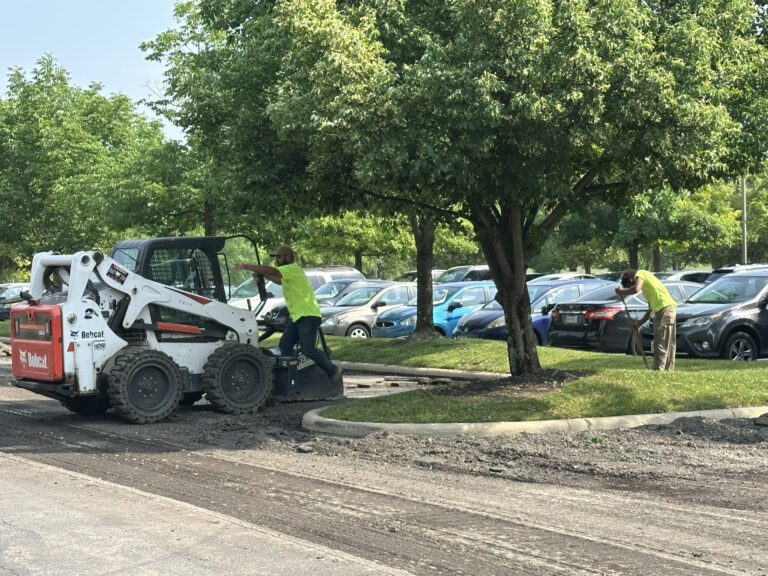
Running power to chargers in an existing lot usually means saw cutting the asphalt, digging a trench, laying conduit and backfilling. How that trench is restored makes a big difference in how the lot performs over the next several years.
Poorly compacted backfill settles. Patches that are not properly sealed at the edges let water in. Within a few seasons, a trench line can turn into a long dip or a row of cracks. Ask your electrical contractor and paving contractor to agree on how the trench will be backfilled, compacted and patched, and who is responsible for each step.
Timing matters too. If you are already planning resurfacing, sealcoating or a new lot, install conduit first, including spare conduit for future chargers. Cutting into fresh pavement a year later is the most expensive way to add capacity. Hot mix paving and patching in our region generally happen from about mid-April through early December, so plan the electrical work to finish before the paving window you are targeting.
Our article on coordinating asphalt, concrete and striping as one capital project offers more ideas for sequencing the work.
Plan Concrete Pads and Equipment Protection
Most pedestal chargers sit on a concrete base or pad. Concrete provides a stable, level mounting surface and holds up better than asphalt around anchored equipment. In many projects, a concrete curb or island is also added to set the charger back from the drive lane.
Chargers need protection from vehicles. Common options include:
- Bollards: sturdy posts placed in front of or around the charger.
- Wheel stops: placed in the space to stop cars before they reach the equipment.
- Raised curbs or islands: a concrete island that holds the charger and keeps bumpers away.
Whatever you choose, keep a clear path for drivers to reach the charging port and handle the cable without stepping over obstacles. Our concrete services include pads, curbs and islands for projects like this.
Lay Out and Stripe the EV Spaces
Good striping makes EV spaces obvious and keeps them available for charging. Typical elements include:
- Stall lines: crisp, well-aligned lines so vehicles park close enough for the cable to reach.
- Pavement stenciling: “EV CHARGING ONLY” or an EV symbol in each stall.
- Colored pavement or stall fill: some owners use a colored background, often green, to make the spaces stand out. This is optional and mainly a visibility choice.
- Signage: posted signs stating that spaces are for vehicles actively charging, along with any time limits or enforcement rules.
Think about which side of the vehicle the charging port is on and how far the cable reaches. Angled spaces or a charger placed between two stalls can serve more vehicle types.
Accessibility is part of the plan as well. Depending on the number of chargers and local rules, some EV spaces may need to be accessible, with an access aisle and an accessible route to the charger. Confirm requirements with your city, township or a qualified professional before finalizing the layout. Our parking lot striping team can lay out EV stalls, stencils and signage as part of a larger restripe.
Maintain EV Spaces Like the Rest of the Lot
EV spaces get the same sun, rain and freeze and thaw cycles as every other space. Include them in your routine inspections. Watch the trench lines for settlement and cracking, especially during the first couple of years. Seal cracks before water gets into the base. Keep stall markings and stencils fresh so the spaces do not get used for regular parking.
When sealcoating, plan carefully around the charging equipment. Sealcoating requires dry pavement, no rain for about a day, and temperatures around 50 degrees and rising, and the spaces will be closed while the sealer cures, so let EV drivers know in advance.
Frequently Asked Questions
Should EV conduit be installed before paving?
Yes, whenever possible. Installing conduit, including spare conduit for future chargers, before resurfacing or new paving avoids cutting into fresh asphalt later.
Do EV charging spaces need special paint?
Not necessarily. Standard traffic paint works for lines and stencils. Some owners add colored fill to make the spaces stand out, but that is a visibility choice rather than a universal requirement.
Do EV charging spaces have to be accessible?
Some may, depending on the number of chargers and local rules. Check with your city, township or a qualified professional before finalizing the layout.
Can trench patches from EV installation fail?
Yes. Trenches that are poorly compacted or sealed often settle and crack. Proper backfill, compaction and hot mix patching help the repair last.
If you are adding EV chargers to a parking lot in Dayton, Beavercreek or elsewhere in the Miami Valley, Vandalia Blacktop & Sealcoating can handle the paving, concrete and striping side of the project. Learn more about our commercial asphalt services, call (937) 454-0571, or contact us to start planning.