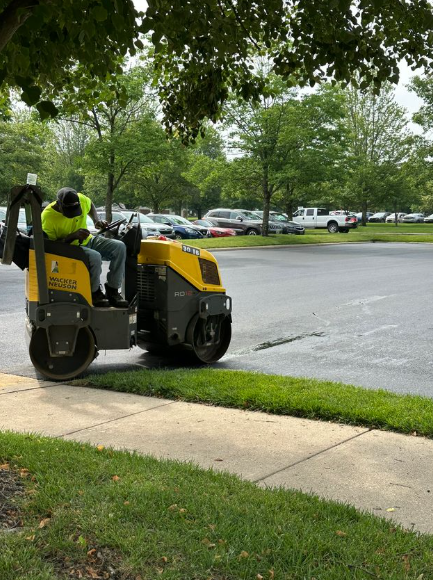
Apartment communities and homeowner associations rely on durable, safe, and cost effective paving surfaces. Parking lots, private roads, and shared drive lanes are used daily by residents, guests, and service vehicles. Choosing between asphalt and concrete is one of the most important decisions property managers and HOA boards will make.
The asphalt vs concrete Dayton Ohio parking lots discussion is not about choosing a universal winner. It is about selecting the right material based on climate, usage, budget, and long term maintenance goals.
Why the choice matters for apartments and HOAs
Pavement is a major capital investment. It affects property appearance, resident experience, and long term financial planning. For apartment communities and HOAs, the wrong choice can lead to higher maintenance costs, more frequent repairs, and operational disruptions.
In areas like Dayton and Beavercreek, pavement must withstand freeze thaw cycles, moisture, and fluctuating temperatures. These regional factors play a critical role in determining how asphalt and concrete perform over time.
Understanding the basic differences
Asphalt is a flexible pavement made from aggregates bound with asphalt cement. Concrete is a rigid pavement composed of cement, aggregates, and water.
The National Asphalt Pavement Association explains that asphalt pavements are designed to be flexible and adapt to changing conditions. This flexibility allows asphalt to absorb stress from traffic and temperature changes.
Concrete, on the other hand, provides rigidity and strength. It performs well under heavy loads but is less forgiving when ground movement or temperature changes occur.
These structural differences influence durability, maintenance, and overall cost.
Which is better asphalt or concrete for apartments in Dayton
Property managers often ask which is better asphalt or concrete for apartments in Dayton. The answer depends on priorities.
Asphalt is typically preferred for apartment communities because it offers faster installation, lower upfront cost, and easier maintenance. It is also quieter under traffic, which can improve resident experience.
Concrete may be preferred in specific areas such as dumpster pads or loading zones where heavy, stationary loads are common. Its rigidity can provide durability in these high stress locations.
Miami Valley HOA paving comparison discussions often conclude that a combination of materials can be effective depending on property needs.
What surface lasts longer in the Miami Valley climate
Another key question is what surface lasts longer in the Miami Valley climate. Concrete generally has a longer potential lifespan when installed correctly. However, this does not automatically make it the better choice.
Asphalt typically lasts fifteen to twenty years in commercial applications, depending on maintenance. With proper care, including crack sealing and sealcoating, its lifespan can be extended.
Concrete may last longer structurally, but repairs can be more complex and expensive. Cracked or settled panels often require full replacement rather than simple repair.
In freeze thaw environments, asphalt’s flexibility can be an advantage. It is better able to adjust to temperature changes and minor ground movement.
Cost comparison for HOA paving in Beavercreek
Cost is often the deciding factor for HOA boards. Vandalia concrete vs asphalt cost comparisons typically show that asphalt has a lower initial installation cost.
Concrete installation involves higher material and labor costs. It also requires longer curing time, which can delay reopening to traffic.
Asphalt projects can often be completed and reopened more quickly. This reduces disruption for residents and simplifies project coordination.
Cost comparison for HOA paving in Beavercreek should also consider maintenance. Asphalt requires routine sealcoating and crack sealing, while concrete may require joint maintenance and panel replacement over time.
Evaluating total lifecycle cost rather than just initial investment provides a more accurate financial picture.
Maintenance and repair considerations
Maintenance requirements differ significantly between asphalt and concrete.
Asphalt maintenance is predictable and manageable. Crack sealing, sealcoating, and occasional resurfacing extend pavement life and maintain appearance. Repairs are often localized and less visually noticeable.
Concrete maintenance can involve joint sealing and panel replacement. Repairs may be more visible and require more extensive work.
For property managers focused on long term planning, asphalt often provides greater flexibility in maintenance scheduling and cost control.
Installation timeline and resident impact
Apartments and HOAs must consider how paving projects affect residents. Asphalt installation is typically faster and allows for quicker reopening to traffic.
Concrete requires longer curing time before it can support vehicles. This can create logistical challenges for properties with limited parking availability.
Minimizing disruption is a key priority in multi family environments, and asphalt often provides an advantage in this area.
Hybrid paving strategies
Many apartment communities and HOAs use a hybrid approach. Asphalt is used for general parking areas and drive lanes, while concrete is installed in high stress zones.
This approach balances cost and durability. It allows property managers to use concrete where it provides the most benefit without increasing overall project cost significantly.
Beavercreek apartment paving materials decisions often involve this type of targeted planning.
Long term planning for HOA communities
Choosing between asphalt and concrete should align with long term maintenance strategies. HOA boards should consider reserve funding, projected maintenance schedules, and expected lifespan when making decisions.
Working with an experienced contractor helps ensure that both materials are evaluated based on real world performance in the Miami Valley.
Making the right decision for your property
The decision between asphalt and concrete is not one size fits all. It depends on property layout, usage patterns, budget, and long term goals.
Asphalt vs concrete Dayton Ohio parking lots comparisons should focus on performance, maintenance, and cost over time rather than initial impressions alone.
Property managers and HOA boards seeking guidance on Miami Valley HOA paving comparison, Vandalia concrete vs asphalt cost, or Beavercreek apartment paving materials can benefit from working with experienced local professionals. Contact Vandalia Blacktop and Sealcoating Inc. to get started.