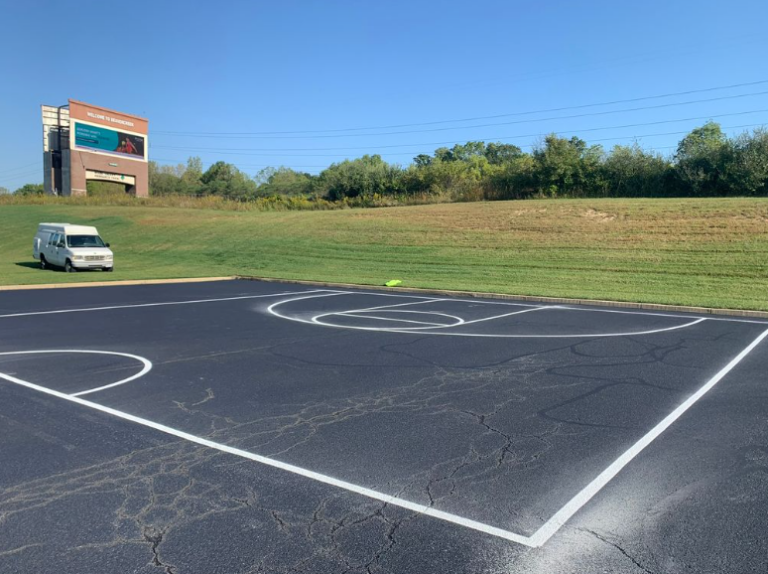
A safe daycare or preschool parking lot separates walking families from moving cars, keeps drop-off traffic flowing in one predictable direction, and stays free of trip hazards like potholes, heaved sidewalks and standing water. Clear striping, smooth pavement and a route that lets parents park and walk without crossing busy lanes do most of the work.
Drop-off and pickup at a child care center are some of the busiest minutes of the day. Parents are in a hurry, small children are hard for drivers to see, and everyone arrives within the same short window. The parking lot has a lot to do with how safe and calm those minutes feel.
Start With How Families Actually Move
Before changing anything, watch a typical morning drop-off. Notice where parents park, which door they walk to, where cars back out and where people cut across lanes. The problems usually show up quickly.
Common trouble spots include:
- Parking stalls that force families to walk behind rows of backing cars.
- Two-way traffic in a lane that is too narrow for it.
- Cars stopping in the drive lane to unload because there is nowhere better.
- No clear walking path from the parking area to the entrance.
- Entrances and exits that stack up traffic onto the street.
Write these down. They become the plan for layout changes, striping and repairs.
Design a Predictable Drop-Off Flow
One-Way Circulation
Where the site allows it, one-way traffic around the lot makes movements predictable. Drivers know which direction cars are coming from, and parents walking with kids only need to watch one way. Directional arrows and clear entry and exit signs make the pattern easy to follow.
Short-Term Parking Near the Door
Most child care drop-offs are short visits, but parents still need to park and walk children inside. Placing short-term stalls close to the entrance cuts down on long walks through the lot. Mark them clearly so staff do not take them.
Keep Staff Parking Out of the Way
Staff arrive before families and stay all day. Putting their parking at the far end of the lot frees the closest spaces for drop-off and keeps the busiest area less crowded.
For more on how layout affects traffic, see designing parking lots that improve traffic flow. The same principles apply to child care sites.
Give Walkers Their Own Space
The most effective safety step is separating walking routes from driving routes. Children are small, quick and unpredictable, and drivers backing out may never see them.
- Marked walkways. Painted crosswalks and walkway lines show families where to walk and remind drivers to watch for pedestrians.
- Sidewalks and curbs. A raised concrete walk along the building front keeps people out of the drive lane. Our concrete services include sidewalks and curbs that create that separation.
- Stop bars and signs. A stop bar before a crosswalk tells drivers exactly where to wait.
- Accessible routes. Accessible parking spaces should connect to the entrance by an accessible route. ADA requirements apply here, so confirm the details with your city or a qualified professional. Our article on ADA parking lot striping requirements explains the general idea.
Remove Trip Hazards and Trouble Spots
Small children trip easily, and parents carrying car seats or bags are not watching their feet. Pavement defects that adults step over can cause real falls.
Check the lot and walkways for:
- Potholes and broken edges, especially near the entrance.
- Sunken or heaved sidewalk panels with raised lips.
- Wide, open cracks that catch stroller wheels.
- Puddles that form in the same spots after every rain and freeze in winter.
Hot mix asphalt repairs are done roughly mid-April through early December. If a pothole opens in winter, cold patch can fill it temporarily until a permanent repair is possible. Standing water often points to a drainage problem that should be corrected so ice does not form in the walking path.
Snow adds its own hazards. Plan where plowed snow will be piled so the mounds do not block drivers’ view of crosswalks or melt across walkways and refreeze overnight. A quick talk with your snow removal provider before the first storm can head off a lot of slips and close calls.
Plan Work Around the School Calendar
Child care centers rarely close for long stretches, so maintenance needs careful timing. Weekends, holiday closures and evenings are the usual windows.
- Sealcoating needs dry pavement, mild temperatures around 50 degrees F and rising, and time to cure, so it fits late spring through early fall.
- Parking lot striping can often be done in a weekend, and it is worth refreshing whenever crosswalks and arrows start to fade.
- Larger paving projects may need to be phased so part of the lot stays open, with plenty of notice to families.
Send parents a short note before any work and post signs at the entrance. Clear communication keeps drop-off from turning chaotic on the first day after a change.
Frequently Asked Questions
How often should a daycare parking lot be restriped?
Restripe whenever lines, crosswalks or arrows have faded enough that drivers might miss them. High-traffic child care lots often need it more often than quiet office lots.
Are speed bumps a good idea in a daycare lot?
Traffic calming can help slow drivers, but it should be planned carefully so it does not create trip hazards or drainage problems. Talk through options with your contractor.
Can work be done while the center is open?
Small repairs sometimes can, but most striping, sealcoating and paving is scheduled for weekends or closures so children are never near equipment or wet surfaces.
A well-planned lot makes drop-off safer for children and less stressful for parents and staff. Vandalia Blacktop & Sealcoating has been improving parking lots in Dayton, Englewood and across the Miami Valley since 1975. Call (937) 454-0571 or contact us to walk your lot and talk about layout, repairs and striping.