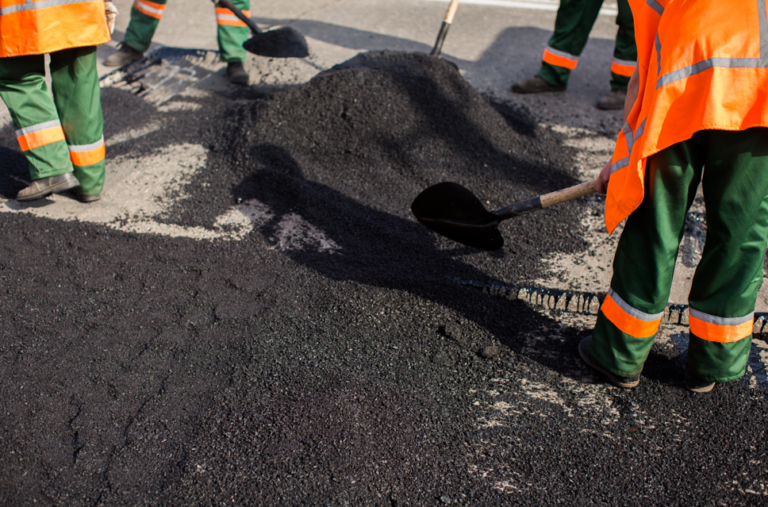
Asphalt is a practical, popular surface for backyard basketball courts and other home sport areas because it is smooth, forgiving underfoot, quick to install and easy to repair. A good court comes down to the same basics as a good driveway: solid base preparation, a gentle slope for drainage, a smooth finish and regular maintenance like crack sealing and sealcoating.
Plenty of families start by shooting hoops at the end of the driveway, then decide they want a dedicated space for basketball, pickleball practice, street hockey or just a place for kids to ride bikes. Here is what to think about before you build one.
Why Asphalt Works Well for Home Courts
Asphalt has a little give compared with concrete, which many players notice in their knees and ankles over a long afternoon. The dark surface also dries quickly after rain and sheds snowmelt faster in spring.
Other advantages homeowners appreciate:
- Smooth, even play surface for dribbling, skating and riding.
- Fast installation once the base is ready, with a shorter wait before light use than concrete.
- Easy repairs. Cracks can be sealed and damaged areas patched without tearing out the whole court.
- Flexible shapes. A court can be built to fit an odd yard, extend an existing driveway or wrap around a patio.
Concrete is also an option and some families prefer it for its lighter color and hard surface. If you are weighing the two, our article comparing asphalt and concrete for Ohio properties covers the trade-offs, and we install both through our asphalt and concrete services.
Planning the Location and Size
Start with how you will use the space. A single hoop with room for shooting and one-on-one needs far less pavement than a half court with a full key, and a multi-sport pad may need room for nets or goals at both ends.
Choosing the spot
- Pick the flattest part of the yard you can. Building on a steep slope adds grading work and cost.
- Avoid low areas where water collects after storms.
- Stay clear of large trees. Roots can lift and crack the pavement, and falling leaves and sap stain the surface.
- Leave buffer space around the edges so players are not running into fences, sheds or windows.
- Think about noise and stray balls near neighbors and the street.
Rules and permits
Many cities, townships and HOAs have rules about impervious surfaces, setbacks from property lines and backyard structures. Before you commit to a size and location, call your local zoning or building office and check your HOA covenants. Requirements in Centerville may be different from those in Troy, so do not assume.
It is also smart to call the Ohio utility locating service before any digging, so buried lines are marked before excavation starts.
What Goes Into Building an Asphalt Court
A court that stays smooth for years starts below the surface. Skipping base work is the most common reason backyard courts crack and heave.
- Excavation and grading. Topsoil and organic material are removed, and the area is shaped so water will drain off the court instead of pooling.
- Subgrade compaction and stabilization. The soil underneath is compacted, and soft areas are corrected so the court has a firm foundation.
- Stone base. A compacted layer of aggregate spreads loads and helps with drainage.
- Hot mix asphalt. The asphalt is placed and rolled to a smooth, tight finish suitable for play.
The slope deserves special attention. A court has to drain, but too much pitch makes the ball roll away and feels uneven to players. Your contractor should balance the two based on your yard. Our drainage and site preparation work handles grading, compaction and soil stabilization, and you can read more about why it matters in the importance of proper subgrade preparation.
Hoops, Lines and Finishing Touches
If you plan an in-ground basketball system, decide on its location before paving. The post is usually set in its own concrete footing, and some systems use a ground sleeve so the pole can be removed. Coordinating the hoop with the paving crew avoids cutting into a new court later.
Court lines can be painted once the asphalt has cured. Simple layouts, like a free throw line, key and three-point arc, turn a slab of blacktop into a real court. Painted pavement markings are the same kind of work as striping and pavement markings for lots, so ask about adding lines when you plan the project. Some owners also add a colored sport coating made for courts, which is a separate finish applied over cured asphalt.
Keeping Your Court in Good Shape
Backyard courts see lighter loads than driveways, but they still face sun, water and Ohio freeze and thaw cycles.
- Sweep off leaves, dirt and debris, which hold moisture and stain the surface.
- Seal cracks during the warmer months before water gets under the court.
- Sealcoat on a regular schedule to protect the surface from sun and weather, then repaint lines as needed.
- Keep vehicles and heavy equipment off the court unless it was built for them.
- Avoid sharp-legged furniture or stands that can dent the asphalt on hot days.
New courts are paved between about mid-April and early December, when local asphalt plants are producing hot mix. Planning over the winter lets you build in spring and play all summer.
Frequently Asked Questions
Is asphalt or concrete better for a backyard basketball court?
Both work. Asphalt is a little softer underfoot, quick to install and easy to repair. Concrete has a lighter, harder surface. Your budget, yard and preferences will steer the choice.
Can I use my driveway as a basketball court?
Yes, and many families do. If you want more room, a court area can often be added beside or at the end of an existing driveway.
Do I need a permit for a backyard court?
It depends on your city, township and HOA. Check with your local zoning office and association before you build.
Can lines be painted on an asphalt court?
Yes. Lines are painted after the asphalt has cured and can be refreshed after future sealcoating.
Thinking about a backyard court or sport pad? Vandalia Blacktop & Sealcoating has been building residential pavement around the Miami Valley since 1975. Call (937) 454-0571 or contact us to talk through your plans.