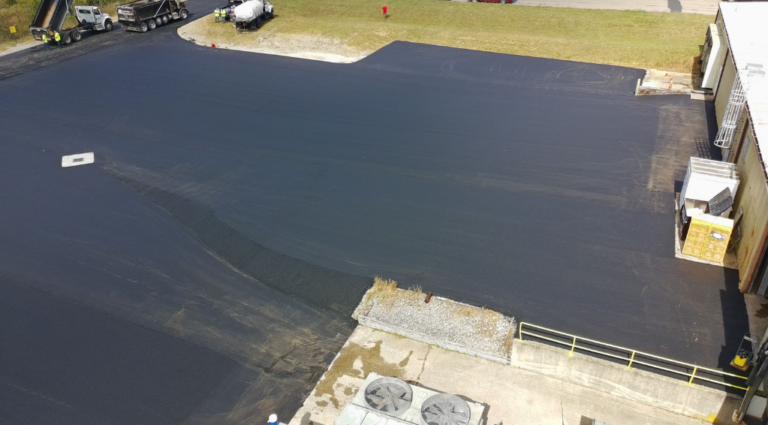
Choosing the right paving material is a major decision for apartment communities and homeowners associations. Parking lots, drive lanes, and private roads must handle constant traffic while maintaining safety and appearance. Property managers often ask, Which is better asphalt or concrete for apartments in Dayton? and What surface lasts longer in the Miami Valley climate?
Understanding the differences between asphalt and concrete helps property managers make informed decisions based on cost, performance, and long term maintenance. This guide breaks down asphalt vs concrete Dayton Ohio parking lots and provides practical insight for properties across Centerville, Beavercreek, and the broader Miami Valley.
Why Material Choice Matters for Apartments and HOAs
Apartment complexes and HOAs require durable surfaces that can handle:
- Daily vehicle traffic
- Delivery trucks and service vehicles
- Seasonal weather changes
- Long term wear and tear
The National Asphalt Pavement Association explains, “Material selection plays a key role in pavement performance and life cycle cost.” For property managers, the goal is to balance upfront cost with long term durability and maintenance needs.
Asphalt vs Concrete Dayton Ohio Parking Lots Overview
Both asphalt and concrete are widely used for commercial and residential paving, but they perform differently in key areas.
Asphalt Characteristics
- Flexible surface that adapts to temperature changes
- Faster installation and curing time
- Lower upfront cost
- Easier to repair and maintain
Concrete Characteristics
- Rigid surface with high load bearing capacity
- Longer initial lifespan in some conditions
- Higher upfront cost
- More complex and expensive repairs
Each material has advantages depending on the specific needs of the property.
Cost Comparison for HOA Paving in Centerville
Cost is one of the first considerations for HOAs and property managers.
Upfront Costs
Asphalt typically has a lower initial installation cost compared to concrete.
The Federal Highway Administration notes that asphalt pavements generally require less initial investment, making them attractive for large surface areas such as apartment parking lots.
Long Term Costs
Concrete may last longer without major replacement, but repairs can be more expensive and disruptive.
Asphalt requires ongoing maintenance such as sealcoating, but these costs are typically predictable and manageable.
For Vandalia concrete vs asphalt cost comparisons, many property managers find asphalt offers a more flexible budget approach over time.
Performance in the Miami Valley Climate
Weather plays a major role in pavement performance.
Freeze Thaw Cycles
Ohio experiences frequent freeze thaw cycles that cause expansion and contraction.
- Asphalt’s flexibility allows it to adapt to these changes
- Concrete is more rigid and can crack under stress
The Federal Highway Administration explains that flexible pavements are often better suited for environments with temperature fluctuations.
Heat and Sun Exposure
- Asphalt can soften in extreme heat but remains resilient
- Concrete reflects heat but can develop surface cracks over time
Moisture and Drainage
Proper drainage is critical for both materials, but asphalt surfaces are generally easier to repair if water damage occurs.
For Beavercreek apartment paving materials, climate adaptability is a key factor when choosing between asphalt and concrete.
Lifespan and Durability
Property managers often ask what surface lasts longer in the Miami Valley climate.
Asphalt Lifespan
With proper maintenance, asphalt parking lots can last 15 to 25 years.
The Asphalt Institute emphasizes that regular maintenance such as sealcoating and crack sealing significantly extends pavement life.
Concrete Lifespan
Concrete can last 20 to 30 years or more under ideal conditions, but its performance depends heavily on installation quality and environmental factors.
While concrete may have a longer lifespan in some cases, the cost and complexity of repairs should also be considered.
Maintenance Requirements
Maintenance is where asphalt and concrete differ significantly.
Asphalt Maintenance
- Sealcoating every two to three years
- Crack sealing as needed
- Occasional patching
These steps help preserve the surface and prevent major damage.
Concrete Maintenance
- Joint sealing
- Crack repair
- Slab replacement for damaged sections
Concrete repairs are often more labor intensive and can disrupt traffic flow.
For Centerville HOA paving comparison, asphalt’s ease of maintenance is often a deciding factor.
Repair and Resurfacing Options
Asphalt Repairs
Asphalt can be repaired through:
- Patching
- Overlay resurfacing
- Crack sealing
Resurfacing allows property managers to restore the surface without full replacement.
Concrete Repairs
Concrete repairs may involve:
- Filling cracks
- Replacing individual slabs
- Grinding uneven surfaces
These repairs can be more time consuming and costly.
The National Asphalt Pavement Association notes that asphalt’s ability to be resurfaced extends its usability and reduces long term costs.
Installation Timeline and Disruption
For apartment communities and HOAs, minimizing disruption is critical.
Asphalt Installation
- Faster installation process
- Can often be used within a short time after completion
- Ideal for phased projects
Concrete Installation
- Longer curing time
- Extended downtime before use
- More challenging for occupied properties
For busy apartment complexes in Dayton, faster installation can reduce inconvenience for residents.
Appearance and Curb Appeal
Both materials offer distinct visual characteristics.
Asphalt Appearance
- Smooth, dark finish
- Clean and uniform look
- Enhances line striping visibility
Concrete Appearance
- Lighter color
- More variation in surface texture
- May show stains more easily over time
Maintaining appearance through regular care is important for both materials.
Which Is Better for Apartments in Dayton
The answer depends on property priorities.
Asphalt Is Often Preferred When:
- Budget flexibility is important
- Maintenance can be scheduled regularly
- Quick installation is needed
- Climate adaptability is a priority
Concrete May Be Considered When:
- Long term durability is the primary goal
- Traffic loads are extremely heavy
- Budget allows for higher upfront cost
For most apartment communities and HOAs in the Miami Valley, asphalt offers a balanced combination of cost, performance, and maintainability.
Building a Long Term Paving Strategy
Choosing between asphalt and concrete is just the first step. Long term success depends on a structured plan.
Key Elements of a Paving Strategy
- Regular inspections
- Preventive maintenance scheduling
- Budget planning for future work
- Working with experienced contractors
The Federal Highway Administration emphasizes that proactive planning reduces overall pavement costs and improves performance.
Why Local Expertise Matters
Working with a contractor familiar with Dayton, Centerville, and the Miami Valley provides valuable insight.
Local professionals understand:
- Regional weather patterns
- Soil conditions
- Traffic demands for apartment communities
- Best maintenance practices for the area
This knowledge helps property managers make informed decisions about asphalt vs concrete Dayton Ohio parking lots.
Making the Right Choice for Your Property
Selecting the right paving material is a key decision for apartment communities and HOAs. Both asphalt and concrete offer advantages, but their performance varies based on cost, maintenance, and environmental conditions.
Understanding Centerville HOA paving comparison, evaluating Vandalia concrete vs asphalt cost, and considering Beavercreek apartment paving materials helps property managers choose the option that best fits their needs.
With the right material and a proactive maintenance plan, parking lots and drive lanes can remain safe, functional, and visually appealing for years.
Contact us to get started with expert guidance on asphalt paving and maintenance for your apartment community or HOA in the Miami Valley.