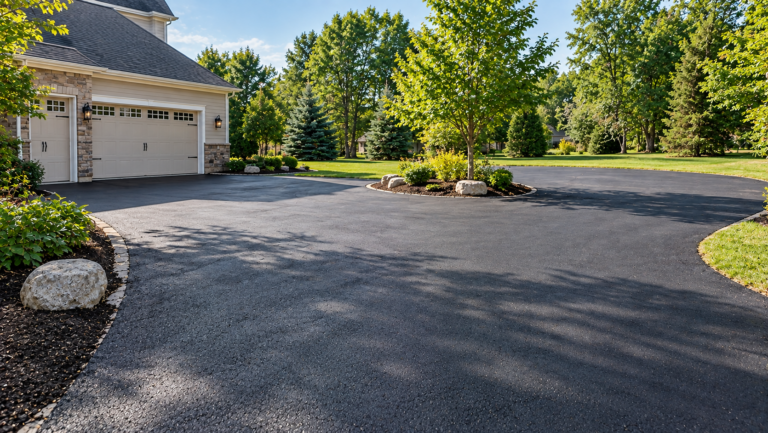
A driveway that worked perfectly when you moved into your home may not work as well several years later. A new driver in the family, additional vehicles, frequent guests, or simply the frustration of backing onto a busy road can make extra pavement surprisingly useful.
Fortunately, expanding a driveway does not always mean tearing out the pavement you already have. In many situations, an asphalt driveway extension can be connected to an existing driveway to create additional parking, a wider entrance, or a convenient turnaround.
The key is treating the new area as a real paving project. Proper excavation, base preparation, drainage, grading, and connection to the existing asphalt all play a role in how well the expansion performs.
Can I Add a Turnaround to My Existing Driveway?
Homeowners frequently ask, can I add a turnaround to my existing driveway?
In many cases, yes.
A turnaround creates enough paved space for a vehicle to change direction before leaving the property. Instead of backing all the way down the driveway or reversing into the street, the driver can turn around near the house and leave facing forward.
A driveway turnaround installation can be particularly useful for longer driveways or properties located along roads where backing out is inconvenient.
The exact design depends on available space, property layout, drainage, landscaping, and how the driveway is used. Some turnarounds resemble a simple paved extension, while larger properties may have a wider turning area designed to accommodate multiple vehicles.
Can I Add Another Parking Space Without Replacing My Driveway?
Another common question is, can I add another parking space without replacing my driveway?
Often, the answer is yes.
If the existing asphalt remains structurally sound, a contractor may be able to construct a new parking area alongside it without replacing the entire driveway.
This can be an attractive option for households that simply need room for another vehicle.
The new pavement still needs its own properly prepared foundation. Simply removing grass and placing asphalt over the soil is not an appropriate method for a lasting residential driveway expansion.
The new section needs to be designed and constructed to support vehicle traffic.
How Do You Extend an Asphalt Driveway?
Understanding how do you extend an asphalt driveway begins below the pavement surface.
The first step is determining the size and location of the expansion. The area then typically needs to be excavated so the contractor can prepare a stable foundation.
A driveway expansion generally involves site preparation, grading, installation and compaction of aggregate base material, and asphalt paving.
The new section also needs to connect properly with the existing driveway.
This transition is important because the old and new pavement are separate structures. Poor preparation at the joint can create a weak area where water enters or pavement begins to separate.
Professional installation helps create a smoother and more durable connection.
The Base Matters as Much as the Asphalt
Homeowners naturally focus on the visible asphalt surface, but much of a driveway’s performance depends on what is underneath it.
The aggregate base distributes vehicle loads and provides support for the pavement above.
If the soil beneath a proposed parking area is soft, wet, poorly compacted, or otherwise unstable, simply paving over it can lead to settlement and cracking.
Proper base preparation is especially important when homeowners add parking to an asphalt driveway because the new pavement is often being constructed over an area that previously supported lawn or landscaping rather than vehicles.
A contractor should evaluate existing conditions and prepare the new section accordingly.
Drainage Needs to Be Planned Before Paving
Adding pavement changes how water moves across a property.
Grass and landscaped areas can absorb some rainfall. Asphalt does not absorb water in the same way, so an expansion can redirect runoff toward the yard, garage, neighboring property, or another section of the driveway.
Proper grading helps direct water away from areas where it could create problems.
Before beginning an asphalt driveway extension, consider where water currently travels and how the proposed pavement could change that pattern.
Drainage is especially important around garages and low areas. A new parking space should not create a path that directs water toward the foundation or garage entrance.
Driveway Turnarounds Need Enough Space to Work
A turnaround only helps if vehicles can actually maneuver within it comfortably.
A driveway turnaround installation should therefore consider the types of vehicles that regularly use the property.
A compact car requires less maneuvering room than a pickup truck or large SUV. Homeowners who frequently receive deliveries may also want to consider how larger vehicles navigate the property.
The shape and dimensions of the turnaround should fit the site rather than being added wherever unused yard space happens to exist.
Good planning can make the finished expansion feel like an intentional part of the original driveway.
Widening Can Solve Everyday Parking Problems
Not every property needs a full turnaround.
Sometimes adding a strip of pavement along one side of the driveway is enough to make daily parking significantly easier.
Driveway widening can create room for two vehicles to park beside each other, provide extra space near a garage, or reduce the need to move one vehicle whenever another person needs to leave.
A driveway widening contractor can evaluate whether the existing pavement, surrounding grade, and available space are suitable for expansion.
For many households, a relatively modest widening project can make the driveway more functional without dramatically changing the property.
Consider the Condition of the Existing Driveway
Before expanding, evaluate the asphalt already in place.
If the existing driveway has only minor wear and remains structurally sound, connecting a new section may be practical.
However, widespread cracking, significant settlement, large potholes, or base failure may change the project.
It may not make sense to install brand new pavement next to a driveway that is approaching the point of major reconstruction.
In that situation, coordinating the residential driveway expansion with repairs, resurfacing, or replacement may create a better overall result.
A professional evaluation can help determine the appropriate approach.
Check Property and Local Requirements
Before expanding pavement, homeowners should also consider property boundaries, easements, setbacks, drainage requirements, and local regulations.
These requirements can affect where additional pavement can be installed and how large an expansion can be.
This is particularly important when widening a driveway near a property line or modifying the area where a driveway meets the road.
Confirming requirements before construction can prevent the proposed expansion from conflicting with utilities, drainage areas, or other restrictions.
Plan the Expansion Around How You Actually Use the Property
The best driveway design is not necessarily the largest one. It is the one that solves the problem you have.
If backing onto the road is frustrating, a turnaround may be the priority. If family members constantly shuffle vehicles, an additional parking space may make more sense. If the driveway feels narrow near the garage, widening may provide the most practical improvement.
A properly planned asphalt driveway extension can make an existing driveway more useful without requiring complete replacement. The important part is building the new area with the same attention to foundation, drainage, grading, and pavement quality that would be expected from a new driveway.
If you are considering a turnaround, additional parking space, or wider driveway, Vandalia Blacktop & Sealcoating Inc. can evaluate your existing pavement and property layout to determine the right approach. Whether you want to add parking to an asphalt driveway or complete a larger residential driveway expansion, contact us to get started.