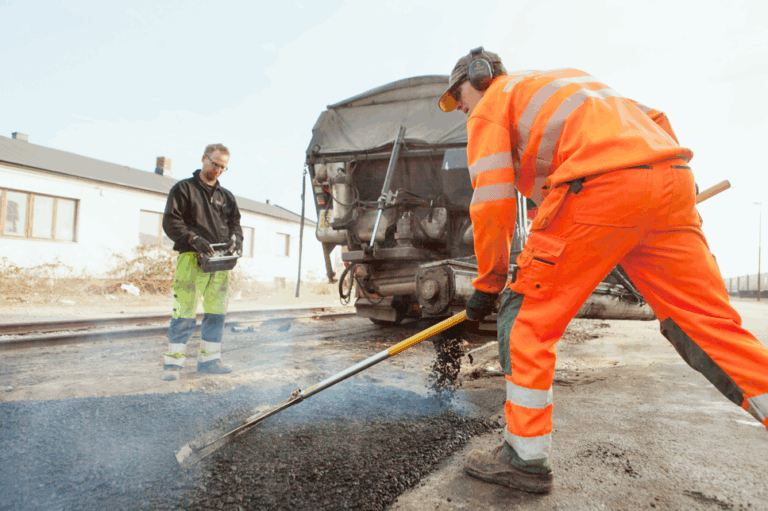
As winter fades and the first signs of early spring begin to show in the Miami Valley, asphalt surfaces across Dayton, Englewood, and Beavercreek start revealing the impact of months of freeze thaw cycles. Cracks widen, edges begin to unravel, and the early stages of potholes may begin to form. This is the time of year when property owners search for guidance on crack sealing Dayton February March, Englewood asphalt crack repair spring, Beavercreek driveway crack sealing, and Miami Valley preventative asphalt care.
Knowing when to crack seal in winter or early spring in the Miami Valley is one of the most important decisions for keeping pavement in strong condition. Timing affects how well the material adheres, how effectively cracks are sealed against moisture, and how long the repair will last. This article explains why late winter and early spring offer a strategic window for crack sealing and how proper timing can prevent potholes and extend the life of asphalt surfaces.
Why Timing Matters During the Late Winter to Early Spring Transition
Crack sealing is a preventative maintenance practice that relies heavily on temperature, moisture levels, and the condition of the pavement. During the winter, asphalt contracts as temperatures fall, which causes cracks to open wider. By February and March, these cracks are often at their maximum width, making them easier to identify and easier to fill.
This is also the period when property owners begin asking questions such as does crack sealing prevent potholes in Dayton and what is the best timing for crack repair in Englewood. These questions are valid because potholes form when water enters cracks, freezes, expands, and weakens the pavement structure. Once traffic begins passing over these weakened areas, small cracks become larger failures and eventually form potholes. By sealing cracks before the spring thaw and before heavy seasonal rainfall, property owners can significantly reduce pothole risk.
The Advantages of Sealing Cracks in Late Winter and Early Spring
There are several practical and performance based reasons why late winter and early spring are ideal for asphalt crack sealing in the Miami Valley.
1. Cracks Are More Exposed
Cold weather causes asphalt to contract, which opens cracks to their widest point. This makes them easier to fill effectively. When cracks are narrow or compressed, sealant cannot penetrate as deeply.
2. Prevention Before Spring Moisture Arrives
The Miami Valley often sees increased rainfall during early spring. Sealing cracks in February and March reduces the chance that water will enter the pavement structure. Eliminating water infiltration is one of the most effective ways to prevent future potholes.
3. Preparing for the Heat of Summer
Once warm weather arrives, unsealed cracks can expand even more quickly. Asphalt softens in summer and becomes more vulnerable to deformation. Crack sealing ahead of the warm season creates a protective barrier that helps pavement withstand both heat and traffic.
4. Scheduling Flexibility and Better Weather Windows
While winter can be unpredictable, the tail end of the season provides more mild days that allow crews to seal cracks successfully. Early spring offers even more consistent conditions. Scheduling crack sealing during this timeframe helps property owners avoid the seasonal rush that often begins in late spring.
Can Crack Sealing Be Done in Winter?
Many property owners in Dayton and surrounding communities wonder whether crack sealing is possible during the winter months. The answer depends on temperature and surface conditions. While some products are designed to work at lower temperatures, crews still need a dry surface and pavement temperatures above a minimum threshold for proper adhesion.
This means that while sealing can sometimes occur during warm spells in January or February, the most dependable and effective results often occur in late winter and early spring. This helps explain why crack sealing Dayton February March and Englewood asphalt crack repair spring are among the most common service requests of the season.
How Crack Sealing Helps Prevent Potholes in Dayton
Potholes form when water enters cracks, freezes, expands, and forces the pavement apart. Over multiple cycles, the pavement weakens from below the surface. Once traffic applies stress to these weakened spots, chunks of asphalt break loose, forming potholes.
Crack sealing interrupts this process by preventing water from ever entering the cracks. This is especially important in Dayton, where freeze thaw cycles can be frequent and severe. When cracks are sealed early in the year, pavement is better protected before spring rains and freezing nights begin eroding the base layer. For this reason, sealing is considered one of the most cost effective and proactive ways to reduce future pothole formation.
Local Considerations Across the Miami Valley
Different parts of the Miami Valley experience different stresses on their asphalt surfaces. Understanding these local conditions helps determine the best timing for repairs.
Dayton
Urban traffic, heavy parking lot use, and more frequent freeze thaw cycles create aggressive conditions for pavement. Crack sealing in late winter helps stay ahead of early spring water infiltration.
Englewood
Englewood experiences larger daily temperature swings, which cause cracks to widen and contract more dramatically. For this reason, early spring remains the best timing for crack repair in Englewood.
Beavercreek
Residential properties in Beavercreek often have a mix of shaded and sun exposed areas on driveways, which creates uneven heating and cooling. This leads to early cracking. Beavercreek driveway crack sealing performed in late winter or early spring stabilizes pavement before warmer weather accelerates surface wear.
What Property Owners Should Do Before Scheduling Crack Sealing
Before the season begins, property owners can take a few steps to prepare:
-
Inspect pavement during late winter. Cracks are most visible and open during cold months.
-
Take note of widening cracks or depressions. These areas may require sealing or patching.
-
Schedule early. Contractors across the Miami Valley book quickly as spring approaches.
-
Consider pairing services. Crack sealing can be paired with sealcoating later in the season for better overall performance.
Taking action early ensures the pavement receives attention during the ideal temperature window.
Why Working With a Local Contractor Matters
Local asphalt contractors understand the timing and environmental conditions unique to the Miami Valley. They know how freeze thaw cycles affect pavement, what temperatures are needed for materials to cure correctly, and how to schedule work efficiently before peak season begins.
Vandalia Blacktop & Sealcoating brings decades of experience servicing both commercial lots and residential driveways throughout the Miami Valley. With a focus on preventative care, proper application methods, and dependable scheduling, the team helps property owners get the most value out of their pavement investments.
Crack sealing performed during late winter or early spring provides one of the most effective protections against potholes, water infiltration, and premature asphalt aging. By addressing cracks during this strategic window, property owners in Dayton, Englewood, Beavercreek, and surrounding communities can extend pavement life and improve performance year after year.
Contact us to get started.