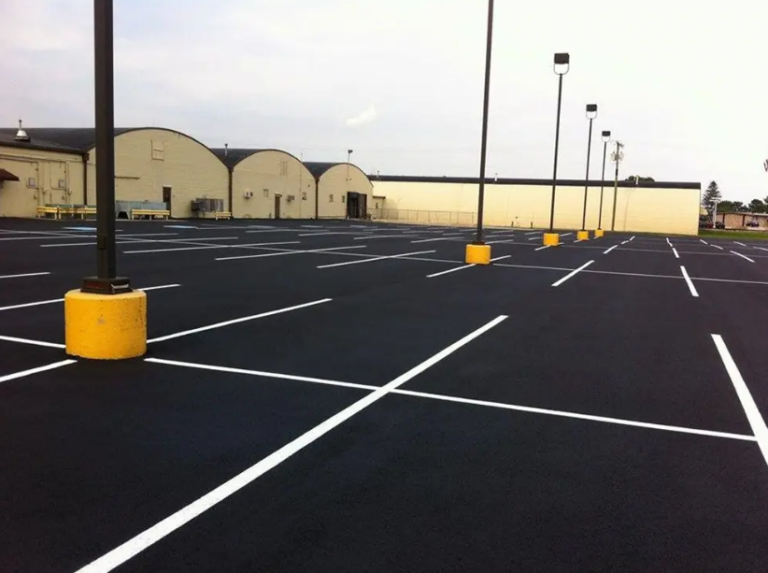
When planning a new asphalt project, most property owners focus on the finished appearance, project cost, and construction timeline. While these are all important considerations, one of the biggest factors affecting how long the pavement will last is something many people never see after construction is complete: asphalt thickness.
The amount of asphalt installed, combined with proper base preparation and drainage, determines how well the pavement will handle daily traffic over the years. A residential driveway has very different structural needs than an apartment community, office complex, or retail parking lot. Choosing the correct pavement design from the beginning helps maximize durability and reduce long term maintenance costs.
Understanding how asphalt thickness influences pavement performance can help homeowners, property managers, and commercial property owners make better decisions before construction begins.
Why Asphalt Thickness Matters
Asphalt is designed to distribute the weight of vehicles across the pavement structure and into the compacted aggregate base below. If the pavement is too thin for the expected traffic, excessive stress may lead to cracking, rutting, settlement, and premature deterioration.
On the other hand, installing additional asphalt beyond what a property requires does not automatically create a better pavement system. The entire pavement structure, including the aggregate base, drainage, and soil conditions, must work together.
A professional asphalt thickness guide considers all of these factors rather than relying on a one size fits all approach.
How Thick Should Asphalt Be for a Driveway?
One of the most common questions homeowners ask is:
How thick should asphalt be for a driveway?
The answer depends on several conditions unique to each property.
An appropriate residential driveway asphalt depth is determined by factors such as:
- Soil stability
- Existing base condition
- Drainage
- Slope
- Vehicle types
- Frequency of heavy vehicles
A driveway used primarily for passenger vehicles may require a different pavement structure than one that regularly supports moving trucks, recreational vehicles, or construction equipment.
Rather than applying the same design to every project, experienced contractors evaluate each site individually.
What Asphalt Thickness Is Best for Parking Lots?
Property managers often ask:
What asphalt thickness is best for parking lots?
Commercial parking lots experience significantly greater traffic than residential driveways.
Depending on the property, pavement may support:
- Resident vehicles
- Customer traffic
- Delivery trucks
- Garbage trucks
- Emergency vehicles
- Maintenance equipment
Because of these heavier loads, commercial asphalt thickness is typically designed with additional structural considerations.
Drive lanes, loading areas, and dumpster enclosures often require different pavement designs than standard parking stalls because they experience higher concentrations of heavy vehicle traffic.
This approach improves long term performance while using materials efficiently.
Does Thicker Asphalt Last Longer?
Another frequently asked question is:
Does thicker asphalt last longer?
Not always.
While adequate thickness is essential, pavement longevity depends on the complete construction process.
Several factors affect lifespan, including:
- Proper excavation
- Aggregate base preparation
- Soil conditions
- Drainage
- Asphalt mix design
- Installation quality
- Preventive maintenance
Even thick asphalt can fail prematurely if water weakens the supporting base or if improper compaction occurs during construction.
Conversely, a properly engineered pavement system built to established asphalt installation standards can provide excellent long term performance without unnecessary material.
The Aggregate Base Is Equally Important
Many people assume the asphalt surface carries the entire vehicle load.
In reality, much of the pavement’s strength comes from the compacted aggregate base underneath.
A properly prepared base:
- Supports heavy traffic
- Distributes weight evenly
- Promotes drainage
- Reduces settlement
- Protects against structural failure
Installing thicker asphalt cannot compensate for an unstable or poorly compacted base.
Professional contractors evaluate existing conditions before recommending a pavement design.
Drainage Protects Pavement Life
Water is one of the leading causes of asphalt deterioration.
Proper grading allows rainwater to move away from the pavement rather than collecting on the surface or beneath it.
Without effective drainage, moisture can:
- Soften the aggregate base
- Create settlement
- Accelerate cracking
- Form potholes
- Shorten pavement life
Good drainage is an essential component of successful parking lot pavement design.
Different Areas Require Different Pavement Designs
Large commercial properties rarely experience uniform traffic across the entire site.
For example:
- Parking stalls primarily support parked passenger vehicles.
- Drive lanes experience constant traffic.
- Dumpster enclosures accommodate heavy garbage trucks.
- Loading zones receive frequent commercial deliveries.
Rather than installing identical pavement throughout the property, experienced contractors often design different pavement structures based on expected traffic conditions.
This targeted approach improves durability while managing construction costs.
Preventive Maintenance Protects Every Pavement
No matter how well asphalt is designed, maintenance remains essential.
Routine preservation helps extend pavement life through:
- Crack sealing
- Sealcoating
- Pavement inspections
- Drainage maintenance
- Prompt repairs
Preventive maintenance slows deterioration and protects the investment made during the original installation.
Property owners who maintain their pavement regularly often delay the need for resurfacing or reconstruction.
Planning for Long Term Performance
Whether installing a residential driveway or constructing a large apartment parking lot, the goal is long term performance rather than simply completing construction.
Experienced contractors evaluate:
- Existing site conditions
- Future traffic loads
- Drainage
- Soil characteristics
- Budget
- Long term maintenance goals
These factors help determine the appropriate pavement structure while supporting years of dependable service.
Following established asphalt installation standards provides a strong foundation for durable pavement.
Choosing the Right Asphalt Contractor
Proper pavement thickness is only one part of a successful project.
Experienced contractors also understand the importance of:
- Site preparation
- Base compaction
- Material selection
- Weather conditions
- Construction timing
- Drainage planning
- Long term maintenance recommendations
Working with a knowledgeable paving contractor helps ensure every part of the pavement system contributes to long lasting performance.
According to the Federal Highway Administration, pavement structural design should be based on anticipated traffic loads, subgrade conditions, environmental factors, and drainage to maximize pavement performance and service life. The National Asphalt Pavement Association also emphasizes that proper pavement design, quality materials, and sound construction practices are all essential components of durable asphalt pavements.
The lifespan of asphalt depends on much more than the surface itself. Proper pavement thickness, a stable aggregate base, effective drainage, quality installation, and ongoing maintenance all work together to create pavement that performs well for many years. Whether you need a residential driveway or a commercial parking lot, selecting the right pavement design from the beginning helps protect your investment and reduce future repair costs.
If you are planning an asphalt project and want expert guidance on the right pavement design for your property, Vandalia Blacktop & Sealcoating Inc. can help. Our experienced team evaluates every project individually to recommend durable asphalt solutions that match your property’s needs. Contact us to get started.