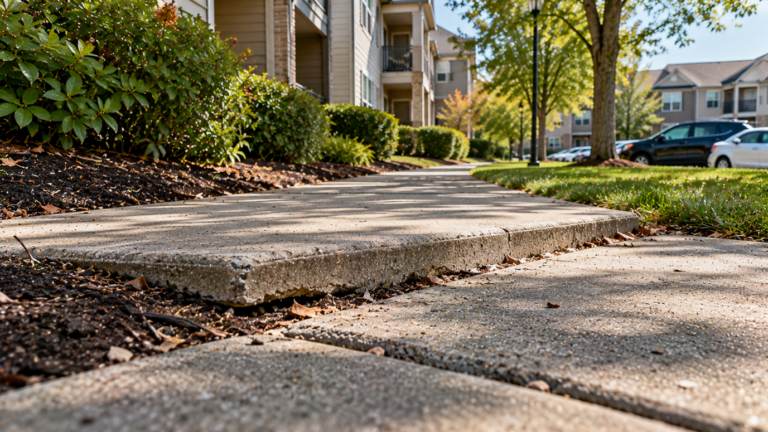
Sidewalks are among the most frequently used features of an apartment community. Residents depend on them to reach parking lots, building entrances, mailboxes, recreational areas, and other shared spaces. When those walkways are smooth and level, they are easy to overlook. When concrete begins to sink or shift, however, even a small section can become a noticeable problem.
Uneven sidewalks can create tripping hazards, interfere with accessibility, collect water, and make a property appear poorly maintained. For apartment owners and property managers, identifying settlement early is an important part of maintaining safe and functional pedestrian routes.
Understanding the causes of concrete walkway settlement can help property managers determine when repairs are appropriate and when replacement may be necessary.
Why Do Apartment Sidewalks Sink?
One of the most common questions is, why do apartment sidewalks sink?
Concrete sidewalks rely on the soil and supporting materials beneath them to remain stable. When that support changes, individual slabs may settle, tilt, or separate from neighboring sections.
Several conditions can contribute to settlement.
Poorly compacted soil may gradually compress under the weight of the concrete. Water can wash away supporting material or weaken the ground beneath a walkway. Soil movement, erosion, and nearby construction activity may also affect stability.
In some situations, tree roots can lift sections of pavement while surrounding slabs remain at their original elevation.
These conditions may develop slowly, making settlement difficult to recognize until a noticeable height difference appears between adjacent slabs.
Uneven Sidewalks Create Tripping Hazards
One of the most immediate concerns with sidewalk settlement is the difference in elevation between adjoining concrete panels.
When one slab sinks below another, the resulting vertical edge can catch a pedestrian’s foot.
This can be particularly concerning in apartment communities where residents regularly walk between buildings, parking areas, and shared amenities.
Children, older adults, visitors, and residents carrying groceries or other items may have difficulty noticing uneven pavement.
Property managers should pay particular attention to sidewalk transitions near entrances, parking lots, stairways, and frequently used pedestrian routes.
Timely sunken concrete sidewalk repair can help address these conditions before they become more severe.
Settlement Can Affect Accessibility
Apartment communities need to consider how sidewalk conditions affect residents and visitors with different mobility needs.
An uneven walkway may be especially difficult for someone using a wheelchair, walker, cane, or stroller.
Abrupt changes in elevation can interrupt otherwise accessible pedestrian routes.
Settlement can also change the slope of a walkway, potentially creating problems even when the surface does not contain a large visible crack.
Accessibility requirements depend on the location and function of the route, along with applicable laws and standards.
When planning multifamily concrete repair, property managers should evaluate whether the finished walkway will provide appropriate slopes, transitions, and clearances.
Standing Water Can Make Settlement Worse
Water is both a potential cause and consequence of sidewalk settlement.
When a concrete slab sinks, it may create a low area where rainwater collects.
Standing water can enter joints and cracks, affecting the soil or base beneath the pavement. Over time, this can contribute to additional movement.
During colder weather, water collecting on uneven sidewalks may freeze, creating slippery conditions.
Repeated freezing and thawing can also contribute to deterioration where concrete is already cracked or damaged.
Proper drainage should therefore be considered whenever concrete walkway settlement is evaluated.
Correcting the visible height difference without addressing an underlying drainage problem may allow settlement to continue.
How Can Property Managers Identify Sidewalk Settlement?
Some sidewalk problems are obvious, while others require closer inspection.
Property managers should look for differences in elevation between adjoining slabs, cracks that have widened, tilted concrete panels, and gaps developing along walkway edges.
Other warning signs include standing water, soil erosion, exposed slab edges, and sections that appear to slope toward buildings rather than away from them.
Sidewalks near downspouts, drainage structures, retaining walls, and landscaped areas deserve particular attention.
Regular inspections help property managers document changing conditions and prioritize sunken concrete sidewalk repair before damage spreads.
When Should a Settled Concrete Sidewalk Be Replaced?
Property managers frequently ask, when should a settled concrete sidewalk be replaced?
Replacement may be appropriate when settlement is severe, the concrete is extensively cracked, or the supporting materials beneath the slab have become unstable.
A slab that has broken into multiple pieces may not be a good candidate for a limited repair.
Replacement may also be necessary when correcting drainage, accessibility, or grading problems requires rebuilding the walkway at a different elevation.
However, not every settled sidewalk requires complete replacement.
The appropriate solution depends on the condition of the concrete, the amount of movement, and the stability of the underlying support.
A professional evaluation can help determine whether repair or uneven sidewalk replacement is the better option.
Can Settled Concrete Be Repaired Without Replacement?
In some cases, structurally sound concrete slabs can be lifted or stabilized using specialized methods.
These approaches may be appropriate when the concrete remains intact and the underlying conditions can be addressed.
However, lifting a slab does not automatically solve every settlement problem.
If the concrete is badly deteriorated, the soil continues to erode, or the walkway requires significant grading changes, replacement may provide a more suitable solution.
Property managers should also consider whether the repaired surface will meet applicable accessibility and drainage requirements.
The goal of multifamily concrete repair should be to restore a stable, functional walkway rather than simply make the surface appear level temporarily.
Why Base Preparation Matters During Replacement
Successful sidewalk replacement begins below the concrete surface.
When a failed slab is removed, the underlying soil and base should be evaluated.
Soft soil, erosion, poor compaction, and drainage problems may need correction before new concrete is installed.
Without proper preparation, replacement slabs may experience similar settlement in the future.
The new walkway should also be graded appropriately to direct water away from vulnerable areas.
For apartment communities, careful preparation helps protect the investment in apartment sidewalk replacement and supports long term pavement performance.
Prioritize High Traffic Pedestrian Routes
Large apartment communities may have extensive sidewalk networks, making it difficult to address every problem simultaneously.
Property managers can prioritize repairs based on the severity of the damage and how frequently each walkway is used.
Primary entrances, routes connecting parking areas to buildings, accessible pathways, and sidewalks near shared amenities often deserve particular attention.
Documenting problem areas with photographs and inspection notes can help establish repair priorities.
For larger properties, sidewalk improvements may be incorporated into a broader capital maintenance plan alongside asphalt repairs, curb replacement, and drainage work.
Sidewalk Conditions Affect the Entire Property
Uneven concrete does more than create a potential tripping hazard.
Deteriorated sidewalks can make an apartment community appear neglected, even when landscaping and buildings are otherwise well maintained.
Cracked or settled walkways may also interfere with routine maintenance, snow removal, and pedestrian circulation.
Addressing these problems contributes to a more functional and attractive property.
For property managers, proactive uneven sidewalk replacement and repair can also reduce the likelihood of increasingly extensive deterioration.
Make Sidewalk Inspections Part of Routine Maintenance
Concrete walkways should be included in regular property inspections rather than evaluated only after a complaint.
Seasonal inspections are particularly useful because soil movement, drainage conditions, and winter weather can affect pavement over time.
Property managers should document settlement, monitor changes, and address underlying problems before selecting a repair method.
A consistent inspection program can also make future concrete maintenance easier to budget.
For apartment communities with multiple buildings, maintaining accurate records of sidewalk conditions helps identify recurring problems and determine which areas should receive priority.
Safe, functional sidewalks are an important part of maintaining an apartment property. When concrete slabs sink, tilt, or separate, the resulting conditions can affect pedestrian safety, accessibility, drainage, and the overall appearance of the community.
If your apartment property has sunken, cracked, or uneven sidewalks, Vandalia Blacktop & Sealcoating Inc. can evaluate the affected areas and recommend appropriate concrete improvements. From targeted sunken concrete sidewalk repair to complete apartment sidewalk replacement, contact us to get started.