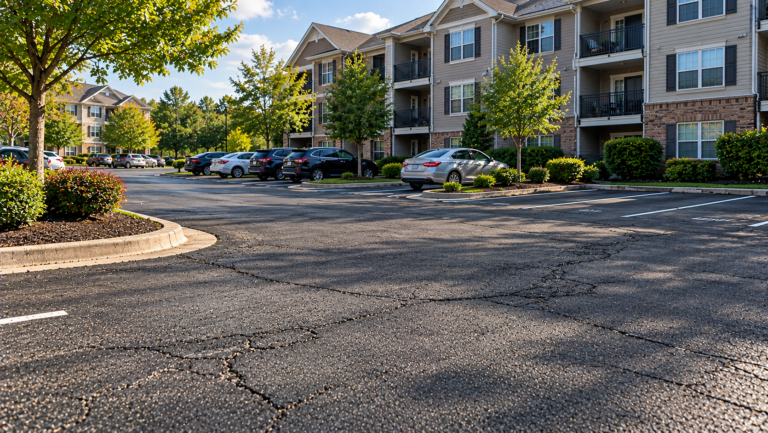
For property managers, major asphalt work is much easier to handle when it appears in next year’s capital budget instead of becoming this year’s emergency expense. Parking lot resurfacing, reconstruction, drainage improvements, concrete repairs, and other large projects require planning, especially at apartment communities where construction must be coordinated around residents and daily operations.
Effective asphalt capital planning gives property managers time to evaluate pavement conditions, prioritize projects, obtain realistic estimates, and decide which improvements should happen first. It also makes it easier for owners and decision makers to understand why pavement funding is necessary.
The best time to start planning next year’s asphalt work is before next year’s budget is finalized.
How Far Ahead Should Property Managers Budget for Paving?
A common question is, how far ahead should property managers budget for paving?
Ideally, major pavement needs should be evaluated during the current budget cycle rather than waiting until visible damage becomes severe. If your organization prepares next year’s capital budget several months in advance, pavement inspections and preliminary estimates should happen early enough to inform that process.
Large projects may require additional time for:
- Site evaluations
- Budget approval
- Contractor scheduling
- Resident communication
- Construction phasing
- Drainage planning
- Concrete repairs
- Striping and traffic planning
Starting early also provides flexibility. Instead of reacting to the worst pavement problem, property managers can decide which work is urgent and which improvements can be scheduled for later phases.
Start With a Property Wide Pavement Inspection
Good commercial pavement budgeting begins with understanding current conditions.
Walk the entire property and document pavement issues rather than focusing only on the most obvious potholes. Parking lots can deteriorate differently from one section to another because traffic, drainage, pavement age, and construction history vary throughout the site.
Look for:
- Cracking
- Potholes
- Rutting
- Settlement
- Standing water
- Crumbling edges
- Failed patches
- Faded striping
- Damaged curbs
- Sidewalk deterioration
Pay particular attention to entrances, dumpster areas, loading zones, utility cuts, tight corners, and heavily traveled drive lanes. These areas often experience greater pavement stress.
A professional inspection can help distinguish cosmetic surface wear from structural problems that may require more extensive repairs.
How Do You Estimate Future Parking Lot Repair Needs?
Property managers frequently ask, how do you estimate future parking lot repair needs?
The process begins by looking at both current pavement condition and the rate at which problems are developing.
A small isolated crack is different from widespread interconnected cracking. Likewise, a shallow surface defect requires a different response than pavement that is sinking because of a weak base.
Previous maintenance records can also provide useful information. If the same area has been patched repeatedly, the underlying problem may require a more permanent solution.
An experienced paving contractor can evaluate pavement condition and help identify which sections may need crack repair, patching, resurfacing, or reconstruction.
This creates a more informed foundation for asphalt replacement planning.
Separate Maintenance From Capital Improvements
Not every pavement expense belongs in the same category.
Routine maintenance may include services such as crack sealing, minor patching, sealcoating, and restriping. Larger capital improvements can involve resurfacing significant sections, full depth reconstruction, drainage upgrades, curb replacement, or complete parking lot replacement.
Separating these needs helps property managers create a clearer budget.
Routine maintenance can help protect pavement that remains structurally sound, while capital funding can be reserved for areas approaching the end of their useful service life or experiencing structural deterioration.
A strong property manager paving budget should account for both.
What Should Be Included in an Asphalt Capital Plan?
Another important question is, what should be included in an asphalt capital plan?
A useful plan should identify more than the estimated price of paving. It should describe the scope and priorities of the project.
Consider including:
- Pavement areas requiring work
- Type of repair recommended
- Drainage improvements
- Concrete curb and sidewalk work
- Striping requirements
- Accessibility considerations
- Project phasing
- Estimated construction schedule
- Preliminary budget
- Future maintenance needs
Photographs and pavement maps can also help owners understand where funding will be used.
This information turns asphalt capital planning into a long term property management tool rather than a single line item in an annual budget.
Prioritize Repairs by Risk and Condition
When a property has multiple pavement problems, everything may not need to be completed at once.
Prioritize areas based on condition, traffic, safety, drainage, and the likelihood that delaying work will lead to more extensive deterioration.
For example, a small crack in a lightly traveled parking space may require less immediate attention than severe pavement failure at the main entrance.
Likewise, standing water caused by drainage problems may deserve priority because moisture can contribute to additional pavement deterioration.
Ranking projects helps managers direct available capital toward the areas where it can have the greatest practical impact.
Plan Apartment Parking Lot Capital Improvements in Phases
Large apartment communities often benefit from phased construction.
Completing an entire parking lot at once may create unnecessary disruption for residents. Apartment parking lot capital improvements can often be divided into logical sections that allow portions of the property to remain accessible.
Phasing may also make large projects easier to budget across multiple capital cycles.
For example, one year might focus on structural repairs and drainage improvements in the most deteriorated section. Another phase could address resurfacing elsewhere on the property.
A contractor familiar with apartment communities can help develop a sequence that considers parking availability, traffic flow, resident access, and construction efficiency.
Consider More Than Asphalt
Parking lot capital planning should examine the entire paved environment.
A resurfacing project may also be the right time to address:
- Catch basins
- Drainage
- Concrete curbs
- Sidewalks
- Dumpster pads
- Pavement markings
- Accessibility features
Coordinating related improvements can prevent situations where newly installed asphalt must later be disturbed for another project.
It also gives property managers a more accurate picture of the total capital investment required.
Build Flexibility Into the Budget
Pavement conditions can change between budgeting and construction.
Winter weather may worsen existing cracks. Previously hidden base problems may become visible. Drainage issues may require additional attention.
For that reason, commercial pavement budgeting should be based on a thorough evaluation rather than the assumption that every project will involve straightforward resurfacing.
Clearly defining the proposed scope before budgeting helps reduce surprises and allows decision makers to understand potential variables.
Think Beyond Next Year
The strongest capital plans do not stop with the next paving project.
After identifying next year’s priorities, begin mapping likely needs for the following several years. Some areas may require immediate reconstruction, while others may remain good candidates for preventive maintenance.
This longer view supports better asphalt replacement planning and can help prevent multiple large pavement expenses from arriving unexpectedly in the same budget year.
It also gives property managers a clearer picture of how maintenance today may delay more expensive work later.
Turn Pavement Needs Into a Predictable Capital Plan
Parking lots represent a significant property asset, and waiting for widespread failure can make budgeting much more difficult. Early inspections, realistic scopes, project prioritization, and phased construction give property managers greater control over both pavement condition and capital spending.
A well organized property manager paving budget should identify what needs attention now, what can be maintained, and what will likely require investment in future years. For apartment communities, that approach also creates more time to plan resident communication and minimize construction disruptions.
If you are beginning next year’s budget process, Vandalia Blacktop & Sealcoating Inc. can evaluate your pavement, identify potential capital needs, and help develop a practical plan for upcoming asphalt repairs, resurfacing, or replacement. Contact us to get started.