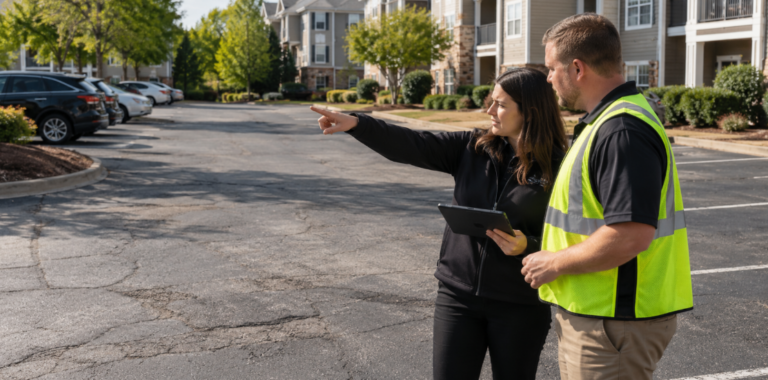
Managing pavement at one property requires regular attention. Managing parking lots, drive lanes, sidewalks, and asphalt surfaces across several apartment communities or commercial properties adds another level of complexity. A pothole may appear at one location while another needs crack sealing, and a third may be approaching the point where resurfacing makes more financial sense than continued repairs.
Without a consistent system, it is easy for maintenance decisions to become reactive. Effective property management asphalt repair planning gives managers a way to compare pavement conditions, address urgent problems first, and make better use of limited maintenance budgets.
The goal is not necessarily to repair everything at once. The goal is to understand which problems require immediate attention, which preventive services can protect pavement that is still in good condition, and which larger projects should be incorporated into future capital budgets.
Start With a Portfolio Wide Pavement Assessment
Effective multi-property pavement maintenance begins with knowing what you have.
Property managers should develop an inventory of paved areas across every location. This may include parking lots, access roads, fire lanes, dumpster areas, loading zones, and other asphalt surfaces.
Each property can then be evaluated for conditions such as cracking, potholes, drainage problems, settlement, pavement age, faded markings, and previous repairs.
Using a consistent inspection process makes it easier to compare properties instead of evaluating each location in isolation.
Which Asphalt Repairs Should Property Managers Prioritize First?
A common question is: Which asphalt repairs should property managers prioritize first?
Safety concerns should generally receive the highest priority.
Conditions that may require prompt attention include significant potholes, abrupt elevation changes, deteriorated pedestrian areas, pavement failures near entrances, and drainage problems that create standing water or ice.
Accessibility and emergency access should also be considered. Pavement conditions around accessible parking areas, crosswalks, fire lanes, and major pedestrian routes can affect how safely people move around the property.
After immediate concerns are addressed, managers can focus on repairs that prevent relatively minor deterioration from becoming structural damage.
Which Parking Lot Problems Need Immediate Attention?
Not every pavement defect represents the same level of urgency.
A small surface crack in an isolated area is different from a deep pothole in a heavily traveled entrance. Likewise, faded striping may be scheduled as routine maintenance, while severe settlement near a storm drain may require faster action.
When establishing apartment asphalt maintenance priorities, consider three basic factors: safety, severity, and rate of deterioration.
Problems that create immediate hazards or allow rapid water infiltration generally deserve greater attention. Issues that are primarily cosmetic can often be incorporated into scheduled maintenance.
This approach prevents the loudest complaint from automatically becoming the highest maintenance priority.
Prevent Small Problems From Becoming Capital Projects
Once urgent repairs have been identified, the next priority should be pavement preservation.
Cracks provide an important example. A relatively small crack may not interfere with traffic, but it can provide a pathway for water to reach the pavement foundation. Over time, moisture can weaken the supporting materials and contribute to more extensive deterioration.
Preventive services may include crack sealing, sealcoating, drainage maintenance, localized patching, and routine inspections.
The Federal Highway Administration describes pavement preservation as a proactive strategy intended to maintain or improve pavement condition before major rehabilitation or reconstruction is necessary. This principle is particularly useful for property managers responsible for multiple sites because preventive work can help keep more of the portfolio from moving into expensive repair categories.
How Do You Manage Pavement Maintenance Across Multiple Properties?
Property managers frequently ask: How do you manage pavement maintenance across multiple properties?
A standardized condition rating system can make the process significantly easier.
For example, properties can be organized into broad categories such as good, fair, poor, and critical. Managers can then document recommended work, estimated timing, and budget requirements for each location.
A property in good condition might only need crack sealing or sealcoating. A fair property may require localized repairs. A poor property might need resurfacing, while a critically deteriorated parking lot could require reconstruction.
This is the foundation of effective commercial pavement asset management. Instead of treating each repair as an isolated expense, pavement becomes an asset that is evaluated, maintained, and budgeted throughout its service life.
Build a Multi Year Maintenance Schedule
Once pavement conditions are documented, property managers can organize repairs across several budget years.
The first year should focus on urgent safety concerns and deterioration that is likely to spread rapidly. Later years can incorporate preventive maintenance, resurfacing, drainage improvements, striping, and eventual reconstruction.
This approach provides several advantages. Property managers can anticipate major expenses, coordinate work with other capital improvements, and reduce the number of unexpected paving emergencies.
A multi year plan should remain flexible. Pavement conditions can change because of severe winters, drainage failures, construction traffic, utility work, or unexpected damage.
Regular inspections allow priorities to be adjusted as conditions change.
Improve Asphalt Repair Budgeting
Effective asphalt repair budgeting should account for both routine maintenance and larger capital projects.
Routine expenses may include crack sealing, patching, sealcoating, inspections, and restriping. Capital budgets may include resurfacing, major drainage corrections, base repairs, or complete pavement replacement.
Separating these categories makes it easier to understand how much money is being spent preserving existing pavement compared with replacing deteriorated assets.
It also helps property managers avoid a common problem: postponing relatively affordable maintenance until deterioration requires a much larger capital investment.
Consider Traffic and Property Use
Two parking lots with similar pavement conditions may still require different priorities.
A heavily traveled apartment entrance may deserve attention before a lightly used overflow parking area. Similarly, pavement near dumpsters and loading zones experiences heavier vehicle loads than ordinary parking stalls.
When comparing properties, consider:
- Traffic volume and vehicle weight
- Pedestrian activity
- Resident and customer access
- Emergency vehicle routes
- Drainage conditions
- Accessibility
- Planned construction or property improvements
These factors help determine the real operational importance of each repair.
Coordinate Repairs to Reduce Disruption
Portfolio management also creates opportunities for more efficient scheduling.
Property managers may be able to group similar services across several nearby properties. Crack sealing, patching, sealcoating, or striping can potentially be coordinated within a broader maintenance program.
Apartment communities also benefit from planning paving work around resident traffic, deliveries, moving schedules, and other property projects.
Thoughtful scheduling makes maintenance less disruptive while helping managers keep a clearer picture of work occurring across the portfolio.
Work With a Contractor Who Understands Property Management
Managing several parking lots requires more than calling for repairs when potholes appear. An experienced asphalt contractor can help document pavement conditions, identify emerging problems, establish repair priorities, and create realistic maintenance schedules.
This relationship becomes especially valuable when developing long term commercial pavement asset management plans. Consistent inspections provide a history of pavement performance that can inform future repair and capital decisions.
For apartment communities, the contractor should also understand how to phase projects so residents maintain reasonable access while work is completed.
Property managers do not need to repair every pavement issue at every property simultaneously. They need a reliable process for identifying risk, preserving pavement that remains serviceable, and preparing financially for larger projects. With consistent inspections, clear apartment asphalt maintenance priorities, and disciplined asphalt repair budgeting, a large portfolio becomes much easier to manage.
If you manage multiple apartment communities or commercial properties and need help developing a practical pavement maintenance strategy, Vandalia Blacktop & Sealcoating Inc. can evaluate your asphalt, prioritize repairs, and help plan future paving projects. Contact us to get started.