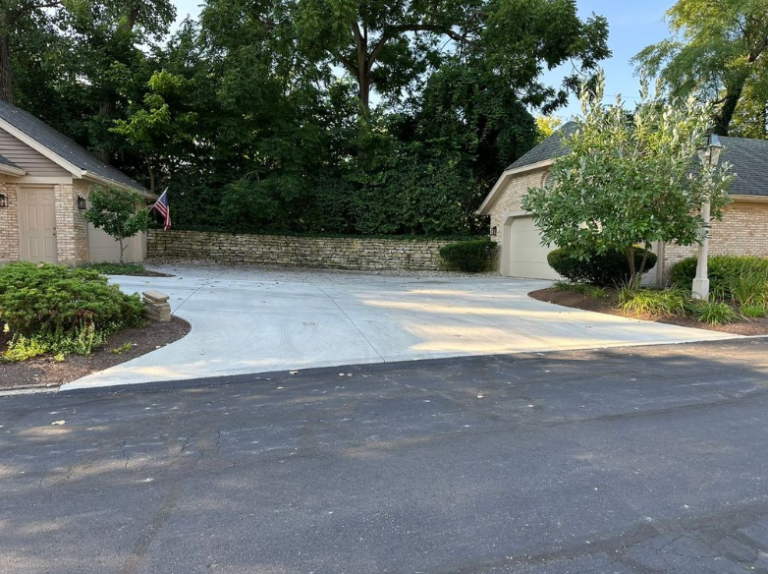
A safe medical office parking lot gives patients accessible parking close to the entrance, a smooth and level route from the car to the door, and a clearly marked drop-off zone where riders can get in and out without stepping into traffic. Because many patients use walkers, wheelchairs or canes, or are simply not feeling well, small pavement problems that most people step over can become real hazards at a clinic.
Medical offices, dental practices, urgent care centers and therapy clinics in Kettering, Centerville and across the Miami Valley all share this challenge. The good news is that most of the fixes are straightforward once you look at the lot through a patient’s eyes.
Start With Accessible Parking and Routes
Accessible parking at a medical facility is not just a box to check. Patients with mobility limits often make up a larger share of visitors than at a typical store, and the trip from the car to the front door needs to work for them every time.
The basic elements include accessible spaces located on the shortest practical route to the entrance, access aisles next to those spaces for ramps and wheelchair transfers, van-accessible spaces, proper signage and an accessible route with curb ramps where the route crosses a curb. The route itself should be firm, stable and free of steps, broken edges and steep slopes.
Exact requirements for the number of spaces, dimensions, slopes and signs come from federal accessibility standards and local codes, and medical facilities may have additional considerations. Confirm the details for your site with your city or township and a qualified design professional. Our article on ADA parking lot striping requirements covers the general principles.
Common Problems We See
- Accessible spaces placed far from the door because they were added after the lot was built.
- Faded access aisle markings that other drivers park in.
- Curb ramps that have settled, cracked or separated from the asphalt.
- Low spots that hold water or ice right where patients step out of the car.
Designing a Drop-Off Zone That Works
Many patients arrive as passengers: a family member drives, a medical transport van brings them, or a rideshare drops them off. Without a dedicated drop-off area, those vehicles stop in drive lanes or fire lanes, and patients end up crossing traffic or walking long distances.
A good drop-off zone sits close to the main entrance, ideally under a canopy, with a curb-free or ramped connection to the sidewalk so wheelchairs and walkers can roll straight onto the walk. It should be long enough for a vehicle to pull fully out of the travel lane and wide enough for doors to open and a wheelchair to be unloaded.
Traffic flow around the drop-off matters too. One-way circulation, clear arrows and a marked “drop-off only” area help keep drivers from parking there. Fire lane rules often apply near building entrances, so check with your local fire department before marking the area.
Removing Trip Hazards
For most people, a small pothole or a raised sidewalk joint is a nuisance. For an elderly patient or someone recovering from surgery, it can mean a fall. That makes routine pavement repair a patient safety issue, not just a maintenance item.
Walk your lot and look for:
- Potholes and broken patches in parking spaces and walking paths.
- Raveling, where loose stones break away from the surface and roll underfoot.
- Uneven transitions where asphalt meets concrete sidewalks, curbs or ramps.
- Heaved or sunken concrete at sidewalks and entrances.
- Wheel stops that have shifted into walking routes.
Asphalt repairs with hot mix are done from about mid-April through early December, when regional asphalt plants are open. In winter, cold patch can fill a pothole to remove an immediate hazard, but it is temporary and should be replaced with a permanent repair in spring.
Drainage, Ice and Visibility
Water that ponds in parking spaces or at the base of a curb ramp freezes on winter mornings, which is exactly when early appointment patients are arriving. Correcting low spots, keeping catch basins clear and making sure water flows away from walking routes are some of the most valuable improvements a clinic can make.
Snow storage needs a plan as well. Plowed snow piled in accessible spaces or access aisles takes those spaces out of service and pushes patients onto worse routes. Mark snow storage areas away from entrances and drop-off zones.
Visibility is the other half of safety. Bright, well-maintained striping and pavement markings guide drivers and show pedestrians where to walk, and good lighting helps patients see curbs and edges during darker winter afternoons. For more on that, read how parking lot lighting and asphalt work together.
Scheduling Work Without Disrupting Patients
Clinics cannot close the lot for a day, so maintenance has to be planned around appointments. Sealcoating and striping can be done in sections or on evenings and weekends, and accessible spaces near the entrance can be kept open by phasing the work. Clear signs and advance notice to patients help.
Sealcoating needs dry pavement, a dry forecast for about a day and temperatures around 50 degrees F and rising, which in Ohio means late spring through early fall. Restriping usually follows sealcoating so markings are bright and accurate. Larger paving or reconstruction projects fit best during the warmer months, so planning them the fall before helps secure a good time slot.
Frequently Asked Questions
How many accessible parking spaces does a medical office need?
The required number depends on the total number of spaces and the type of facility, and medical facilities can have different requirements than other businesses. Confirm the count with your local building department or a qualified design professional.
Do we need a separate drop-off area?
It is not always required, but it is one of the best safety improvements a clinic can make. It keeps passengers out of traffic and gives transport vans a safe place to unload.
Can a pothole be fixed in the middle of winter?
It can be filled with cold patch to remove the hazard, but that repair is temporary. A permanent hot mix repair is done once asphalt plants reopen in spring.
How often should markings be refreshed?
Restripe whenever lines, symbols or access aisles start to fade. On busy medical lots, that often means more frequently than at a typical office building.
Vandalia Blacktop & Sealcoating has served commercial properties across the Miami Valley since 1975, and our commercial asphalt team understands what patient-facing lots need. To review accessibility, drop-off and safety concerns on your lot, contact us or call (937) 454-0571.