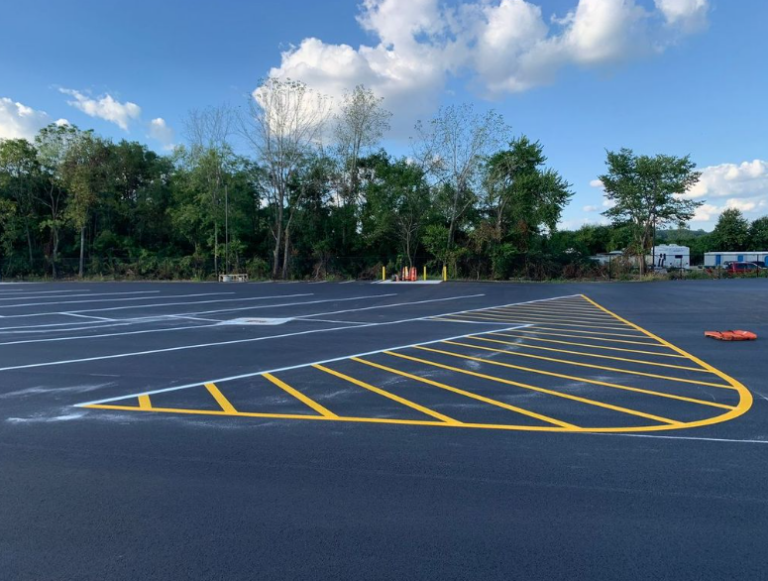
On a tight budget, the best pavement maintenance plan for a small business is to fix safety hazards first, keep water out with crack sealing and drainage fixes, and then sealcoat and restripe on a steady schedule. Small, regular steps cost far less over time than waiting until the lot needs major repairs or replacement.
Most small business owners do not have a line in the budget labeled “parking lot.” The lot gets attention when a customer complains or a pothole swallows a tire. That approach feels cheaper in the moment, but it usually leads to bigger bills later. Here is how to stretch a modest budget so your pavement lasts.
Why Cheap Now Can Cost More Later
Asphalt usually fails from the top down and from the inside out. Sun dries the surface, small cracks open, and water slips through. Once water reaches the base, freeze-thaw cycles in Ohio winters push the damage along quickly. A hairline crack becomes a pothole, and a cluster of potholes becomes a section that needs to be dug out.
The early steps in that chain are inexpensive to address. The later ones are not. Spending a little each year to interrupt the process is the most budget-friendly thing you can do. For a closer look at when a lot crosses the line into major work, see asphalt resurfacing vs full replacement for parking lots.
Step One: Handle Safety Hazards First
When money is limited, start with anything that could hurt someone. A customer who trips in a pothole or slips on ice in a low spot is a bigger problem than a faded line.
- Fill potholes in walkways, entrances and busy parking rows.
- Repair raised or broken sidewalk edges near your door.
- Fix low spots where water collects and freezes in winter.
- Make sure accessible parking and routes are usable and clearly marked.
If a pothole opens in winter, cold patch is a fair temporary fix. Plan a permanent hot mix repair once asphalt plants reopen in spring, around mid-April.
Step Two: Keep Water Out
Water is the main reason pavement breaks down early, so the next dollars should go toward keeping it out.
Crack Sealing
Sealing cracks is one of the least expensive forms of pavement care, and it does a lot of good. Hot rubberized sealant fills cracks so rain and snowmelt cannot reach the base. It is typically done spring through fall, when cracks are clean and dry.
Simple Drainage Fixes
Look at where water goes after a storm. Clogged catch basins, downspouts dumping onto the pavement and ponding along curbs all feed damage. Some fixes, like clearing debris from a drain, cost little. Others may need regrading. Our article on why proper drainage is the secret to long-lasting asphalt explains what to watch for.
Step Three: Protect the Surface
Once cracks are sealed and water is managed, sealcoating protects the top layer from sun, rain and fluid spills. It slows the drying and graying that leads to new cracks. It also makes the lot look cared for, which customers notice.
Sealcoat needs dry pavement, about a day without rain and temperatures around 50 degrees F and rising, so schedule it for late spring through early fall. Do not over-apply it. Sealing too often wastes money and can cause peeling.
Fresh parking lot striping usually follows. Clear lines help customers park efficiently and keep the lot looking organized, and restriping is one of the more affordable ways to refresh how a property looks.
Ways to Stretch Your Budget Further
A few habits help small budgets go further:
- Bundle work. Combining crack sealing, sealcoating and striping into one visit is often more efficient than scheduling them separately.
- Get estimates early. Fall and winter are good times to collect quotes and set the next year’s priorities before contractors’ calendars fill up.
- Phase larger jobs. If a section needs repaving, consider doing the worst area this year and the rest next year.
- Keep records. Note what was done, when and where. It helps you plan and helps a contractor give accurate recommendations.
- Talk to neighbors. Businesses sharing a lot or a strip center can sometimes coordinate work with the property owner.
- Watch for warning signs. Catching new cracks and soft spots early keeps repairs small.
An honest contractor will help you rank needs instead of pushing a full repave. Ask what can safely wait a year and what cannot.
Know What Not to Skimp On
Some savings backfire. Patching over a soft, wet base without fixing the cause, or paving a thin layer over failing pavement, often means paying for the same repair twice. When a section truly needs rebuilding, it is usually better to do that one area right and hold off on cosmetic work elsewhere. Spending on the base and drainage is rarely wasted, because everything on top depends on them.
Frequently Asked Questions
What is the cheapest way to make my lot last longer?
Crack sealing and drainage fixes give the most protection for the money, because they stop water from reaching the base.
Is sealcoating worth it if I am short on money?
It is worth doing after cracks are sealed and repairs are made. Sealcoating over broken pavement does not fix it, so put repairs first.
When should I call a pro instead of patching it myself?
Call when potholes keep coming back, when large areas are cracked like alligator skin, or when water sits on the lot after every storm. Those signs point to base or drainage problems.
Small businesses in Vandalia, Huber Heights and across the Miami Valley have trusted Vandalia Blacktop & Sealcoating since 1975. We can walk your lot, show you what needs attention now and what can wait, and build a plan that fits your budget. Call (937) 454-0571 or contact us to get started.