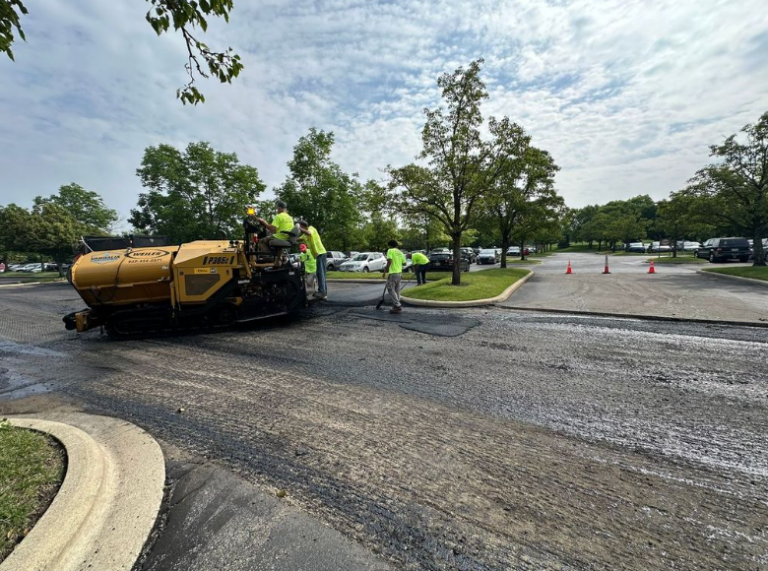
An apartment complex can be sealcoated in sections by dividing the parking lot into phases, closing one section at a time while residents park in the open areas, and moving to the next section once the sealer has cured. With a clear map, advance notice and a backup plan for weather, most residents can keep parking near home through the whole project.
Closing an entire lot for sealcoating is rarely practical at an apartment community. People need to get to work, deliveries keep arriving and trash still gets picked up. Phasing the work takes more planning, but it is the standard approach for occupied properties.
Why Phasing Works for Apartment Lots
Sealcoat needs time to dry and cure before cars can drive on it. If the whole lot were sealed at once, residents would have nowhere to park for that period. By sealing in sections, part of the lot is always available.
Phasing also gives the property manager more control. Sections can be planned around building entrances, dumpster access, mailbox kiosks and resident schedules. If weather interrupts the project, only one section is affected rather than the entire property.
For more on keeping a property running during pavement work, see planning paving projects without interrupting daily operations.
Drawing the Phase Map
Start with a site map and divide the lot into logical sections. Good phase boundaries often follow natural breaks, such as islands, building groups or drive aisles.
Things to consider
- Access. Keep at least one entrance and exit open at all times, and make sure emergency vehicles can still reach every building.
- Parking capacity. Each open section needs enough room to absorb the cars displaced from the closed section. Overflow areas, side streets or nearby lots may help on larger properties.
- Accessible parking. Residents who rely on accessible spaces need a usable alternative close to their building while their section is closed.
- Trash pickup. Schedule the dumpster area for a day when trucks are not due, or coordinate with the hauler.
- Deliveries and moves. Avoid sealing the main loading area on busy move-in days.
Number each section and assign a date. Many communities seal sections on consecutive days so the project wraps up quickly.
Communicating With Residents
Most problems with phased sealcoating come from residents who did not know their area was closing. Over-communicating is worth the effort.
- Send notice well in advance. Include the phase map, the date for each section, when cars must be moved and when the section reopens.
- Use several channels. Door hangers, email, text messages, the resident portal and posted signs reach different people.
- Remind the day before. A reminder the evening before each section closes catches people who missed the first notice.
- Explain where to park. Tell residents exactly which areas are open for them.
- State the policy for cars left behind. If vehicles may be towed or the section skipped, say so clearly and follow your lease and local rules.
Ask residents to avoid walking on fresh sealer as well. Sealer tracked on shoes can end up on hallway carpet and entry floors.
Weather and Scheduling
Sealcoating needs dry pavement, no rain in the forecast for about a day, and temperatures around 50 degrees and rising. In Ohio, that generally means late spring through early fall. Our article on when to schedule sealcoating in the Miami Valley covers timing in more detail.
Weather is the main reason phased projects shift, so build flexibility into the plan:
- Include a rain date in resident notices, or explain that dates may move and how residents will be told.
- Avoid locking in move-out inspections or other events that depend on a specific section being open.
- Expect slower drying in shaded areas and on cooler, humid days.
The contractor should tell you when each section can reopen based on conditions that day. Opening too early leaves tire marks and scuffs in the new sealer.
What Happens in Each Section
Each phase follows the same basic steps, which helps residents know what to expect:
- Cars are cleared and the section is barricaded.
- The surface is cleaned of dirt, debris and loose material.
- Oil spots are treated so the sealer can bond.
- Cracks are sealed, often in advance of the sealcoat.
- Sealer is applied and left to dry.
- Lines are restriped once the sealer has cured enough, then the section reopens.
Sealcoating covers the old lines, so parking lot striping is usually part of the same project. Some contractors stripe each section as it is done, while others stripe the whole lot at the end. Ask how your contractor plans to handle it, and confirm that numbered or reserved spaces will be repainted correctly.
Frequently Asked Questions
How many sections should an apartment lot be divided into?
It depends on the size of the lot, the number of entrances and how much open parking each phase leaves. Smaller properties may need two sections, while larger complexes may need several.
How long is each section closed?
It varies with temperature, sun and humidity. Your contractor will set a reopening time based on conditions on the day of application.
Can residents walk across a section while it dries?
They should avoid it. Wet sealer sticks to shoes and gets tracked indoors. Plan walking routes that go around the closed section.
What if it rains after a section is sealed?
Light rain soon after application can affect the finish. Contractors watch the forecast closely and may reschedule if rain is expected.
Vandalia Blacktop & Sealcoating has been sealcoating apartment communities and HOA lots in Dayton, Tipp City and across the Miami Valley since 1975. If you want to protect your pavement without shutting down resident parking, contact us or call (937) 454-0571 to plan a phased schedule.