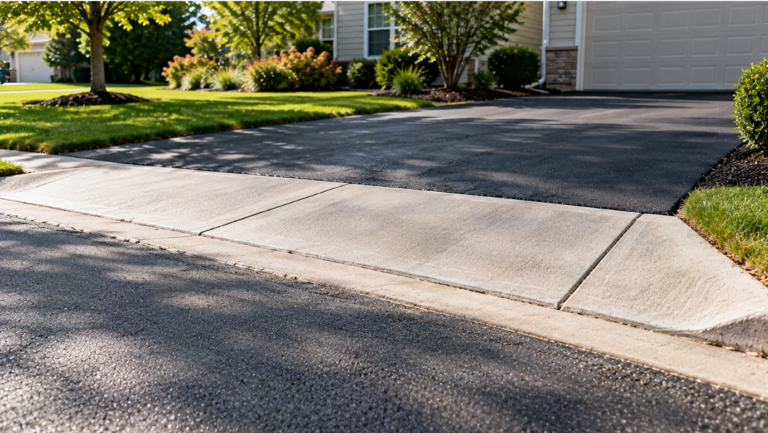
Most homeowners pay attention to the main surface of their driveway, but the section closest to the street is just as important. This area experiences frequent turning, braking, and vehicle traffic, making it particularly vulnerable to wear.
When the pavement near the road begins cracking, sinking, or breaking apart, the problem may involve the driveway apron.
A damaged apron can create an uncomfortable transition between the street and driveway, contribute to drainage problems, and affect the appearance of the property. Fortunately, homeowners may be able to repair or replace this section without reconstructing the entire driveway.
Understanding asphalt driveway apron replacement can help homeowners recognize potential problems, compare repair options, and plan improvements that provide a durable entrance to their property.
What Is a Driveway Apron?
One of the most common questions is, what is a driveway apron?
A driveway apron is the section of pavement that connects a private driveway to the street or roadway. Depending on the property, it may extend from the edge of the road across a sidewalk or public right of way before connecting to the main driveway.
Driveway aprons are commonly constructed from asphalt or concrete.
Their purpose is to provide a functional transition between the roadway and the driveway while accommodating vehicle movement and appropriate drainage.
Although the apron may appear to be part of the driveway, it can fall within a public right of way or be subject to municipal requirements.
That distinction matters when planning repairs or replacement.
Why Do Driveway Aprons Deteriorate?
Driveway aprons experience different stresses than the rest of a residential driveway.
Every vehicle entering or leaving the property travels across the same relatively small area.
Turning movements can place additional pressure on pavement edges, particularly when drivers approach the driveway at an angle.
Aprons may also experience traffic from delivery vehicles, maintenance trucks, and other heavier vehicles.
Water runoff, freeze and thaw conditions, poor base support, and settlement can contribute to deterioration.
Over time, these factors may create cracking, potholes, uneven transitions, or broken pavement edges that require residential driveway apron repair.
When Should a Driveway Apron Be Replaced?
Homeowners frequently ask, when should a driveway apron be replaced?
Replacement may be appropriate when the pavement has extensive cracking, significant settlement, widespread deterioration, or structural problems beneath the surface.
An apron that repeatedly develops potholes or separates from the adjoining driveway may have underlying issues that cannot be resolved through surface patching alone.
However, not every damaged apron requires complete replacement.
Minor cracks or localized defects may be repairable when the pavement remains structurally sound.
A professional inspection can help determine whether asphalt driveway apron replacement is necessary or whether a more limited repair will provide an appropriate solution.
Uneven Aprons Can Make Entering and Exiting Difficult
One of the most noticeable problems with a deteriorating driveway apron is an uneven transition between the street and driveway.
When pavement settles, a raised edge or depression may develop.
Drivers may experience a noticeable bump when entering or leaving the property. In more severe situations, low clearance vehicles may scrape against the pavement.
Uneven transitions can also create problems for bicycles, pedestrians, and people using mobility devices where the apron intersects a sidewalk.
Proper driveway entrance paving should establish a smooth transition while maintaining appropriate drainage and required elevations.
Drainage Is an Important Part of Apron Replacement
The driveway entrance is often where runoff from the driveway and street interact.
Depending on the property layout, water may flow along the curb, across the apron, or toward nearby drainage structures.
If the apron is improperly graded, water can collect at the driveway entrance or flow toward the house.
Standing water may enter pavement cracks and weaken the supporting base.
During colder weather, water that collects near the apron may freeze, creating additional problems.
Before beginning residential driveway apron repair, contractors should evaluate existing drainage conditions and determine whether grading improvements are needed.
Correcting drainage during replacement can help protect the new pavement.
Should a Driveway Apron Be Asphalt or Concrete?
Both asphalt and concrete can be appropriate materials for driveway aprons, depending on the property and applicable local requirements.
Asphalt can provide a practical transition when the adjoining driveway is also asphalt.
Concrete is commonly used for aprons that cross sidewalks, curbs, or public right of way areas.
Some municipalities require specific materials, dimensions, thicknesses, or construction details for driveway entrances.
For that reason, homeowners should not assume they can freely choose between asphalt and concrete in every situation.
A contractor experienced in concrete driveway apron installation can help evaluate the proposed project, while the appropriate local authority can confirm applicable requirements.
Check Local Requirements Before Construction
Driveway aprons can be subject to different rules than pavement located entirely on private property.
Because the apron often connects directly to a public road, municipalities or other road authorities may regulate its construction.
Requirements may involve permits, approved materials, curb modifications, sidewalk transitions, drainage, and construction within the right of way.
Homeowners should determine whether approval is necessary before work begins.
For someone searching for a Springboro driveway contractor, it is particularly important to confirm the requirements of the authority responsible for the roadway rather than assuming every driveway entrance follows the same standards.
Planning ahead can prevent delays or unexpected changes during construction.
Proper Base Preparation Supports Long Term Performance
Like the rest of an asphalt driveway, the apron depends on a stable foundation.
If the underlying soil or aggregate base is weak, new pavement may settle or crack prematurely.
A replacement project may require removing damaged asphalt or concrete, excavating unsuitable materials, preparing the subgrade, and installing a properly compacted base.
The exact construction method depends on the pavement material, expected traffic, and site conditions.
For asphalt driveway apron replacement, the connection between the new apron and existing driveway also deserves attention.
A poorly constructed joint can allow water to enter or create an uneven transition.
Can You Replace the Apron Without Replacing the Driveway?
In many cases, yes.
If the main driveway remains in good structural condition, replacing only the damaged apron may be a practical option.
This allows homeowners to address the deteriorated entrance without removing pavement that still performs well.
However, the contractor should evaluate how the new apron will connect with the existing surface.
If the driveway itself has extensive cracking, settlement, or base failure, a larger project may be more appropriate.
Coordinating apron replacement with other driveway improvements can also help create a more consistent finished surface.
Apron Replacement Can Improve Curb Appeal
The driveway entrance is one of the first paved areas visible from the street.
Cracked asphalt, broken concrete, potholes, and uneven pavement can make an otherwise well maintained property appear neglected.
Replacing a deteriorated apron can improve the appearance of the driveway while creating a smoother transition for vehicles.
For homeowners preparing to sell their property, addressing visible entrance damage may also contribute to a more favorable first impression.
The primary goal, however, should be correcting pavement problems and creating a functional, durable entrance.
Plan the Project Around Your Driveway’s Condition
Before scheduling apron replacement, homeowners should consider the age and condition of the surrounding driveway.
If the apron is the only section experiencing significant deterioration, a targeted replacement may be appropriate.
If cracking and settlement extend farther into the driveway, additional repairs may be necessary.
It is also worth considering whether the driveway entrance needs widening or whether the existing drainage arrangement should be improved.
Discussing these issues before construction begins can help avoid having to modify recently completed pavement.
Protect Your Driveway Entrance With Proper Maintenance
Once a new apron is installed, routine maintenance can help preserve its condition.
Homeowners should monitor cracking, keep drainage paths clear, and address developing pavement defects before they become more extensive.
Special attention should be given to the connection between the apron, street, sidewalk, and main driveway.
These transitions are exposed to repeated vehicle movement and changing weather conditions.
Regular inspections can help identify problems early and determine when maintenance is necessary.
A properly constructed driveway apron creates a smoother connection to the road, supports everyday vehicle traffic, and contributes to the appearance of the property. When cracking, settlement, or structural deterioration develops, professional evaluation can help determine the most appropriate repair.
If your driveway entrance is damaged, uneven, or showing signs of deterioration, Vandalia Blacktop & Sealcoating Inc. can evaluate the pavement and recommend an appropriate solution. From residential driveway apron repair and asphalt driveway apron replacement to concrete driveway apron installation, contact us to get started.