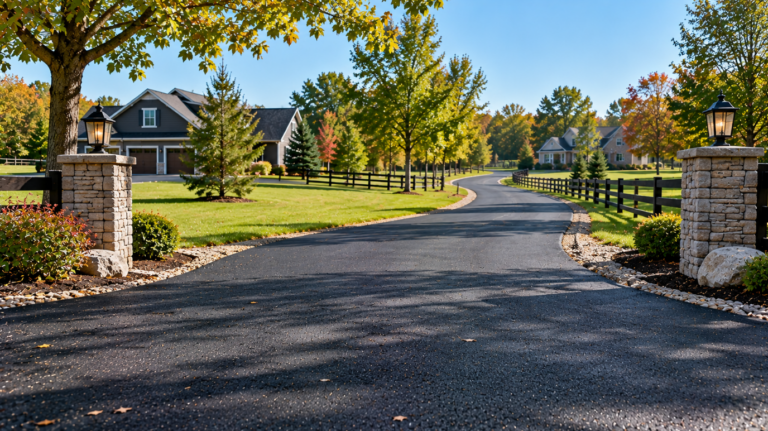
A shared driveway or private access road can make a property more convenient, but maintaining it often requires more planning than an ordinary residential driveway. When several homes, rental properties, or buildings depend on the same road, paving decisions affect everyone who uses it.
Whether you are replacing an aging gravel road, repairing deteriorated asphalt, or planning a new paved entrance, several factors deserve attention before construction begins. Ownership arrangements, drainage, traffic patterns, pavement thickness, and access requirements can all influence the project.
Understanding the basics of shared driveway asphalt paving and private access road paving can help property owners make informed decisions and avoid unnecessary complications.
What Is the Difference Between a Shared Driveway and a Private Access Road?
A shared driveway generally provides access to two or more properties. It may be a relatively short paved section connecting neighboring homes to a public road or a longer driveway serving multiple residences.
A private access road often serves a larger area, such as a group of homes, apartment buildings, rural properties, or a privately managed development.
Unlike public roads maintained by a government agency, private roads typically depend on property owners, associations, or other responsible parties for maintenance and improvements.
Both types of pavement require careful planning because they may support more frequent traffic than a traditional single-family driveway.
Who Is Responsible for Maintaining a Shared Driveway?
One of the most common questions is, who is responsible for maintaining a shared driveway?
The answer depends on property ownership, recorded easements, maintenance agreements, and applicable laws.
Some shared driveways have written agreements explaining how maintenance costs should be divided. Others may be governed by homeowners association documents or property deeds.
In situations where no clear agreement exists, responsibility can become more complicated.
Before beginning shared driveway replacement, property owners should review relevant documents and determine who has the authority to approve construction.
It is also important to establish how costs will be shared, who will coordinate the contractor, and how future maintenance decisions will be handled.
A paving contractor can evaluate the physical condition of the driveway, but questions about legal responsibility should be addressed through the appropriate property documents and, when necessary, a qualified legal professional.
Evaluate the Existing Road Before Planning Repairs
The first step in a successful paving project is understanding the current condition of the driveway or road.
An existing asphalt surface may show cracks, potholes, rutting, settlement, or deteriorating edges. Gravel roads may have drainage problems, washouts, soft areas, or uneven surfaces.
These conditions can reveal problems beneath the visible driving surface.
For example, a private road that develops potholes in the same locations every year may have an underlying drainage or base issue.
Simply covering those areas with new asphalt may not provide a lasting solution.
A professional evaluation can help determine whether the project requires localized repairs, resurfacing, full reconstruction, or an entirely new pavement structure.
How Should a Private Access Road Be Prepared for Asphalt?
Property owners frequently ask, how should a private access road be prepared for asphalt?
Proper preparation begins with evaluating the existing soil and determining how the road will support vehicle traffic.
The construction process may include clearing vegetation, removing unsuitable materials, grading the site, preparing the subgrade, and installing a compacted aggregate base.
The required pavement structure depends on soil conditions, drainage, traffic loads, and the intended use of the road.
For residential access road installation, the base is particularly important because it distributes vehicle loads and supports the asphalt above.
If the foundation is unstable, the pavement may develop cracks, settlement, and other structural problems even when the asphalt surface initially looks excellent.
Drainage Should Be a Major Priority
Water is one of the most important considerations in private road construction.
Long driveways and access roads may cross slopes, low areas, wooded properties, or locations where runoff naturally collects.
Without proper drainage, water can accumulate along pavement edges or penetrate cracks and weaken the supporting base.
Effective drainage planning may involve appropriate road grading, roadside ditches, culverts, or other site-specific improvements.
The goal is to direct water away from the pavement structure without creating new problems for surrounding properties.
When planning Miami Valley private road paving, property owners should also consider how seasonal rainfall and winter weather may affect drainage and pavement performance.
Pavement Thickness Depends on Traffic
Not every private road needs the same pavement design.
A short shared driveway serving two households may experience primarily passenger vehicle traffic. A longer private access road serving multiple residences may also accommodate garbage trucks, delivery vehicles, moving trucks, maintenance equipment, and emergency vehicles.
These differences matter.
Heavier vehicles place greater demands on the pavement structure, especially when they repeatedly follow the same route.
A qualified contractor can recommend appropriate asphalt and aggregate base thicknesses based on expected traffic and site conditions.
Designing the road for its actual use is more effective than assuming that every residential paving project requires identical construction.
Road Width and Turning Areas Matter
Another important consideration is the layout of the road itself.
Narrow access roads can make it difficult for vehicles to pass one another. Tight corners may create challenges for delivery trucks and emergency vehicles.
Long private roads may also benefit from appropriately designed turnaround areas.
Before construction begins, property owners should consider how residents, visitors, service providers, and larger vehicles will navigate the road.
Local requirements for emergency access, road width, and turnaround space may also apply.
Addressing these concerns during planning can improve daily convenience and reduce the likelihood of future modifications.
Should You Pave an Existing Gravel Road?
Many private access roads begin as gravel surfaces.
While gravel can provide functional access, it requires ongoing maintenance to address potholes, washboarding, erosion, and displaced aggregate.
Converting a gravel road to asphalt can create a smoother driving surface and reduce loose material being tracked onto surrounding pavement.
However, private access road paving involves more than placing asphalt directly over the existing gravel.
The contractor must evaluate the condition, depth, stability, and drainage of the current road base.
Some existing material may be suitable for incorporation into the new pavement structure, while other areas may require reconstruction or additional aggregate.
Proper preparation helps protect the investment in the finished asphalt.
Coordinate Access During Construction
Shared driveways present an additional challenge because several households or buildings may depend on the same entrance.
During paving, sections of the road may need to be temporarily closed while work is completed and the asphalt becomes ready for traffic.
Property owners should discuss construction timing, vehicle access, deliveries, and alternative parking arrangements before the project begins.
For longer roads or properties with multiple entrances, phased construction may be possible.
Clear communication helps everyone understand when work will occur and what temporary restrictions to expect.
Plan for Maintenance After Installation
New asphalt still requires ongoing care.
A maintenance plan should include periodic inspections, attention to drainage, timely crack repairs, and other appropriate pavement maintenance.
Property owners should also establish how future expenses will be handled.
For shared properties, written maintenance arrangements can help prevent disagreements when repairs become necessary.
Taking a proactive approach can help preserve the pavement and reduce the likelihood that minor deterioration develops into larger structural problems.
Choosing the Right Approach for Your Property
Every shared driveway and private access road has different requirements.
Some projects involve resurfacing structurally sound pavement, while others require complete shared driveway replacement or new construction over previously unpaved ground.
The appropriate solution depends on traffic, drainage, soil conditions, available space, and the condition of the existing road.
An experienced paving contractor can evaluate these factors and recommend an approach suited to the property.
For owners considering Miami Valley private road paving, planning ahead also provides time to coordinate with neighbors, review property agreements, and schedule construction around everyone who depends on the road.
A properly constructed shared driveway or private access road should provide dependable access while accommodating the vehicles and conditions it will encounter over time. Careful site preparation, appropriate pavement design, and a clear maintenance plan all contribute to that goal.
If you are considering shared driveway asphalt paving, private road repairs, or a new residential access road installation, Vandalia Blacktop & Sealcoating Inc. can evaluate your property and recommend a practical paving solution. Contact us to get started.