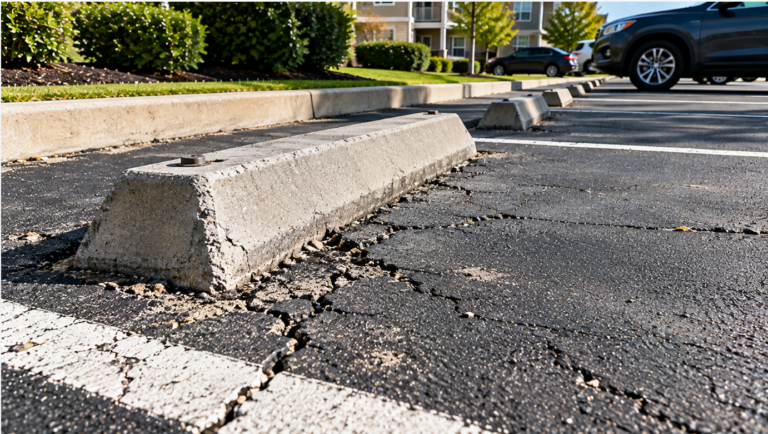
Parking lot wheel stops are small features that serve an important purpose. These concrete, rubber, or other manufactured barriers help drivers position their vehicles within parking spaces and prevent cars from extending into sidewalks, landscaped areas, or nearby structures.
Although wheel stops are designed to improve parking lot organization, the asphalt surrounding them can sometimes develop cracks, potholes, and other forms of deterioration.
For apartment communities, retail centers, office buildings, and other commercial properties, understanding the causes of asphalt damage around wheel stops can help property managers identify problems early and determine when repairs are necessary.
The issue often involves a combination of vehicle impacts, anchoring methods, pavement condition, and drainage.
Can Wheel Stops Cause Asphalt Damage?
One of the most common questions is, can wheel stops cause asphalt damage?
Yes, although properly installed wheel stops do not necessarily damage the pavement.
Wheel stops are intended to provide a physical stopping point for vehicles. However, drivers may occasionally strike them with enough force to move the block or place stress on its anchors.
When these impacts occur repeatedly, the surrounding asphalt can experience concentrated forces.
Damage may develop around the anchoring points, particularly if the pavement is already cracked, thin, or structurally weakened.
Over time, this can contribute to parking space pavement damage, including cracks, loosened anchors, broken pavement edges, and deteriorating areas around the parking block.
Why Does Asphalt Crack Around Anchoring Points?
Most wheel stops need to be secured so they remain in position during normal parking lot use.
Depending on the product and pavement type, installation may involve steel pins, spikes, bolts, or other approved anchoring systems.
These anchors transfer forces between the wheel stop and the pavement.
When a vehicle repeatedly strikes a parking block, movement and vibration can place additional stress on the material surrounding the anchors.
If the asphalt is already deteriorating, cracks may develop or expand around these locations.
Improper anchor selection or installation can also contribute to problems.
A professional parking lot wheel stop repair should therefore consider both the condition of the parking block and the pavement supporting it.
How Should Parking Blocks Be Anchored to Pavement?
Property managers frequently ask, how should parking blocks be anchored to pavement?
The correct method depends on the type of wheel stop, the pavement material, and the manufacturer’s installation requirements.
Concrete parking blocks installed on asphalt may use approved anchoring pins extending through the block and into the pavement or supporting material.
Other wheel stop products may require different fasteners or installation procedures.
The anchors must be appropriate for the specific product and surface. Their length, spacing, and installation method should follow manufacturer specifications.
The condition of the pavement is equally important.
Installing anchors into severely cracked or unstable asphalt may not provide reliable support, even when the correct hardware is used.
Before concrete parking blocks installation, the contractor should evaluate whether the pavement is suitable for anchoring.
Repeated Vehicle Impacts Can Make Damage Worse
Wheel stops are designed to help drivers recognize the end of a parking space, but they are not intended to absorb unlimited vehicle impacts.
When drivers regularly pull forward until their tires strike the block, repeated contact can stress both the wheel stop and its anchors.
If a parking block begins moving, its anchors may loosen or enlarge the surrounding openings.
This can create additional movement and accelerate deterioration.
Apartment parking lots may be particularly vulnerable because the same parking spaces are used repeatedly by residents.
Including wheel stops in routine apartment parking lot repairs and inspections can help identify loose blocks before they create larger pavement problems.
Water Can Enter Around Damaged Anchors
Moisture is another important consideration.
When cracks form around wheel stop anchors, water may enter the pavement and reach the supporting aggregate base.
Over time, moisture can contribute to weakening of the underlying materials, particularly where drainage is already poor.
During colder weather, water within cracks can also contribute to deterioration associated with freezing and thawing.
As the pavement weakens, the anchors may become less secure.
This can create a cycle in which loose wheel stops contribute to pavement damage, while deteriorating pavement provides less support for the anchors.
Addressing drainage and cracking is therefore an important part of preventing recurring asphalt damage around wheel stops.
Pavement Thickness and Base Conditions Matter
Wheel stop performance depends partly on the condition of the pavement beneath them.
A parking lot with a stable aggregate base and properly constructed asphalt is generally better positioned to withstand normal parking activity than pavement with existing structural problems.
If the asphalt is thin, deteriorated, or poorly supported, concentrated loads near anchoring points may contribute to cracking.
Settlement can also create uneven conditions that affect how a wheel stop rests on the surface.
When planning repairs, property managers should determine whether the problem is limited to the anchors or involves the surrounding pavement structure.
Simply replacing the parking block may not solve a problem caused by unstable asphalt.
Recognize Early Warning Signs
Wheel stop problems are often easy to overlook because they occur near the ends of parking spaces.
Property managers should watch for cracks radiating from anchor holes, loose or missing pins, tilted parking blocks, and pavement breaking away around the anchors.
Other warning signs include wheel stops that shift when contacted, standing water near parking space edges, and repeated cracking around previous repairs.
These conditions may indicate that parking lot wheel stop repair is necessary.
Routine inspections can help identify small problems before loose blocks create additional damage or interfere with parking.
Can Damaged Asphalt Around Wheel Stops Be Repaired?
In many cases, yes.
The appropriate repair depends on the extent of the damage and the condition of the underlying pavement.
Minor localized defects may be suitable for targeted asphalt repairs when the surrounding pavement remains structurally sound.
More extensive cracking, settlement, or base deterioration may require removing and rebuilding the affected section.
If the anchors have become loose, the wheel stop may need to be removed while the pavement is repaired.
The contractor can then determine whether the existing block can be reinstalled or should be replaced.
Effective repairs should restore a stable pavement surface and provide an appropriate foundation for the wheel stop.
Consider Wheel Stop Placement During Parking Lot Improvements
Wheel stop placement can influence how parking spaces function.
Blocks positioned incorrectly may interfere with pedestrian routes, vehicle maneuvering, or accessibility.
Property managers should consider the dimensions of parking spaces, nearby sidewalks, curbs, and the types of vehicles using the lot.
Some locations may benefit from a different parking layout or an alternative approach to controlling vehicle movement.
When completing larger apartment parking lot repairs, it may be useful to evaluate whether existing wheel stops remain appropriate for the property.
Any changes should account for applicable accessibility and site requirements.
Include Wheel Stops in Routine Pavement Maintenance
Wheel stops should be inspected alongside asphalt surfaces, curbs, sidewalks, drainage structures, and parking lot markings.
A maintenance inspection should consider whether blocks are securely anchored, whether the surrounding asphalt is cracking, and whether water collects near the parking space edges.
Damaged or displaced wheel stops should be addressed before they create additional pavement problems.
For property managers overseeing multiple parking areas, documenting recurring damage can also help identify spaces where vehicle impacts or underlying pavement weaknesses require closer attention.
Proactive maintenance can reduce the need for repeated repairs in the same locations.
Protect Parking Spaces With Proper Installation and Repairs
Wheel stops are relatively small components of a commercial parking lot, but improper installation, repeated impacts, and deteriorating pavement can create problems that extend beyond the blocks themselves.
Proper anchoring, stable pavement support, effective drainage, and regular inspections all contribute to better long term performance.
For apartment communities and commercial properties, identifying parking space pavement damage early can help prevent more extensive deterioration around parking blocks.
If your property has cracked asphalt, loose wheel stops, deteriorating anchor points, or damaged parking spaces, Vandalia Blacktop & Sealcoating Inc. can evaluate the affected pavement and recommend appropriate improvements. From targeted parking lot wheel stop repair and apartment parking lot repairs to asphalt restoration and concrete improvements, contact us to get started.