A parking lot can have smooth asphalt, clearly marked parking spaces, and well maintained curbs, but if its drainage system is not functioning properly, pavement problems can develop quickly. One of the most overlooked components of commercial pavement maintenance is the drainage outlet.
Drainage outlets help move stormwater away from paved areas and through the property’s drainage system. When these outlets become blocked, damaged, or disconnected, water may collect where it should not, creating problems for the pavement and the people using it.
For apartment communities, retail centers, office buildings, and other commercial properties, regular parking lot drainage outlet maintenance can help prevent avoidable deterioration and identify problems before they require extensive repairs.
What Is a Parking Lot Drainage Outlet?
A drainage outlet is a point where collected stormwater exits a pipe, drainage structure, or other component of a property’s stormwater system.
Parking lots often rely on catch basins, underground pipes, culverts, and outlets to direct runoff away from pavement and buildings.
While catch basins collect water from the surface, outlets allow that water to discharge into an approved drainage area or connected stormwater system.
If an outlet becomes blocked, water may back up through the system, reducing its ability to drain the parking lot.
That is why a complete commercial drainage inspection should consider both where water enters the drainage system and where it eventually exits.
What Happens When a Parking Lot Drainage Outlet Becomes Blocked?
Property managers frequently ask, what happens when a parking lot drainage outlet becomes blocked?
A blockage can prevent stormwater from moving through the drainage system as intended.
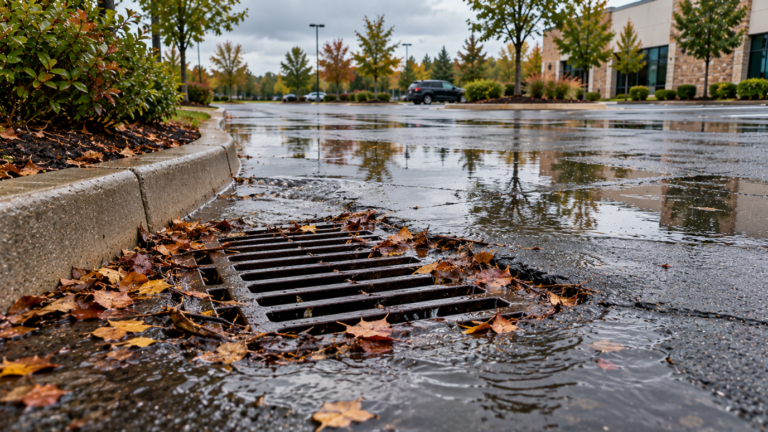
Depending on the layout, water may begin collecting around catch basins, along curbs, or in low sections of the parking lot.
During heavy rainfall, the drainage system may be unable to handle runoff efficiently, increasing the likelihood of standing water or localized flooding.
A blocked stormwater outlet can also cause water to remain in underground drainage structures longer than intended.
If pavement cracks or drainage structures are already deteriorating, prolonged moisture exposure can contribute to additional problems.
Standing Water Can Accelerate Asphalt Deterioration
Asphalt pavement is designed to shed surface water through appropriate grading and drainage.
However, when water remains on the pavement, it has more opportunities to enter existing cracks and joints.
Once moisture reaches the aggregate base, it can weaken the materials supporting the asphalt. Repeated vehicle loads may then contribute to settlement, cracking, and pothole formation.
This process can become particularly troublesome in areas where drainage problems occur repeatedly.
During colder weather, moisture within pavement cracks and supporting materials can also contribute to damage associated with freezing and thawing.
Proper parking lot drainage outlet maintenance helps reduce the conditions that allow these problems to develop.
How Can Property Managers Identify Drainage Outlet Problems?
Another common question is, how can property managers identify drainage outlet problems?
Some warning signs are easy to recognize, while others require a closer inspection.
Property managers should watch for water remaining in parking areas long after rainfall, debris accumulating around drainage openings, unusual erosion near outlet locations, and water backing up around catch basins.
Other indicators may include sediment buildup, damaged outlet pipes, displaced stones, or vegetation obstructing the discharge area.
It is also important to look for changes in drainage patterns.
If a parking lot that previously drained efficiently begins collecting water in certain locations, the drainage system may need attention.
A professional commercial drainage inspection can help identify whether the problem involves an outlet, underground pipe, catch basin, pavement grading, or another component.
Leaves, Sediment, and Debris Are Common Causes
Drainage outlets can become obstructed by materials carried through stormwater systems.
Leaves, grass clippings, soil, sediment, trash, and landscaping debris may accumulate near drainage openings or inside pipes.
Properties with mature trees may experience greater debris accumulation during autumn.
Construction activity can also introduce sediment into drainage systems, particularly when exposed soil is not adequately controlled.
Regular inspection helps identify these materials before they create a significant obstruction.
Property managers should avoid assuming that a drainage system is functioning correctly simply because the surface catch basin appears clear.
The problem may be farther downstream.
Erosion Around Outlets Can Create Additional Problems
Drainage outlets can experience deterioration even when they are not blocked.
Stormwater leaving a pipe can erode surrounding soil if the discharge area lacks appropriate protection.
Over time, erosion may undermine the outlet structure or affect nearby pavement, curbs, slopes, and landscaped areas.
Property managers should look for exposed pipe sections, displaced stone, washed out soil, and changes in the ground surrounding the outlet.
These conditions may require drainage improvements in addition to asphalt drainage outlet repair.
Addressing erosion early can help prevent damage from spreading into adjacent paved areas.
Inspect Drainage Systems After Major Storms
Routine inspections are useful, but significant rainfall can reveal problems that are not obvious during dry weather.
After a major storm, property managers should observe where water collects, how quickly it drains, and whether runoff is flowing through the intended drainage paths.
Areas with recurring standing water deserve particular attention.
An inspection may also reveal debris deposited around drainage outlets or erosion caused by concentrated runoff.
Documenting these conditions with photographs can help contractors evaluate the system and recommend appropriate corrections.
For properties with recurring drainage concerns, observations during and after rainfall can be especially valuable.
Drainage Problems Can Affect Parking Lot Safety
Standing water is not only a pavement maintenance concern.
Large puddles can conceal potholes, uneven surfaces, and other pavement defects.
Water collecting near pedestrian routes may also create inconvenient or potentially hazardous conditions for residents, customers, and visitors.
During freezing weather, poorly drained areas may develop ice, creating additional concerns for vehicles and pedestrians.
Maintaining drainage outlets helps support a more functional parking lot throughout the year.
For apartment communities and commercial properties with frequent pedestrian activity, this should be part of the overall pavement maintenance strategy.
When Is Asphalt Drainage Outlet Repair Necessary?
Not every drainage problem can be solved by removing leaves or surface debris.
An outlet may be cracked, collapsed, displaced, improperly connected, or affected by surrounding settlement.
Underground pipes can also become damaged or obstructed.
When structural problems are present, professional asphalt drainage outlet repair or related drainage work may be necessary.
Depending on the condition of the system, repairs could involve restoring the outlet, replacing damaged pipe sections, correcting erosion, improving grading, or reconstructing affected pavement.
The appropriate solution depends on identifying the source of the problem.
Simply patching asphalt damaged by recurring water accumulation may not provide a lasting repair if the drainage system remains defective.
Include Drainage Outlets in Your Maintenance Schedule
A practical pavement maintenance program should include more than crack sealing, patching, sealcoating, and striping.
Drainage structures deserve regular attention because they directly affect how water interacts with the pavement.
Property managers can schedule inspections during seasonal maintenance, particularly before periods of heavy rainfall and after significant leaf accumulation.
Properties with known drainage problems may require more frequent evaluations.
Keeping records of recurring blockages, standing water, erosion, and completed repairs can also help identify patterns.
For businesses seeking parking lot drainage Dayton services, a comprehensive evaluation should consider the relationship between the asphalt surface, catch basins, underground pipes, and drainage outlets.
Protect Your Pavement by Maintaining the Entire Drainage System
A drainage outlet may be a relatively small part of a commercial property, but its condition can affect a much larger area.
When stormwater cannot move through the drainage system properly, standing water, erosion, weakened pavement foundations, and recurring asphalt deterioration may follow.
Regular inspections help property managers identify blocked outlets, damaged structures, and changing drainage patterns before they create larger maintenance concerns.
If your parking lot experiences recurring standing water, blocked drainage outlets, erosion, or pavement deterioration near drainage structures, Vandalia Blacktop & Sealcoating Inc. can evaluate the affected pavement and recommend appropriate asphalt and drainage improvements. Contact us to get started.