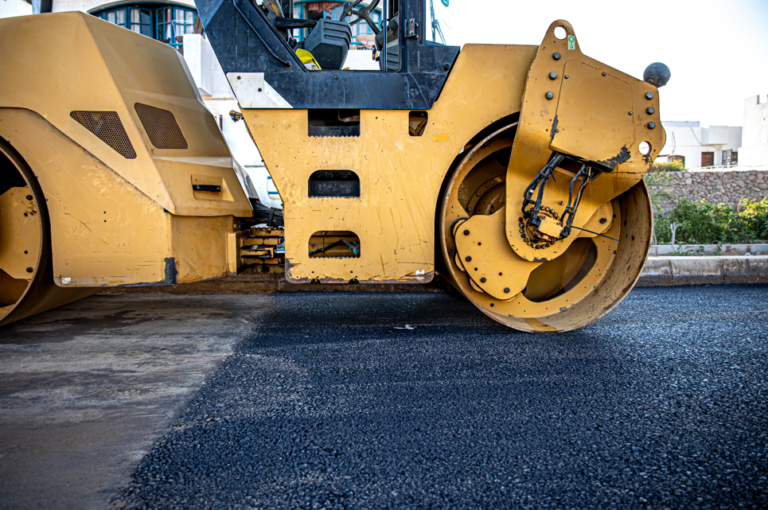
Water pools on a driveway when part of the surface sits lower than the area around it, either because the asphalt was not sloped well when it was built or because the base underneath has settled. Low spots get fixed by correcting the shape of the pavement: cutting out and rebuilding the sunken area, adding a leveling layer of asphalt, or regrading and adding drainage so water has somewhere to go.
A small puddle after a storm may not seem like a big deal. Over time, though, standing water is one of the main reasons asphalt driveways crack, crumble and develop potholes, especially through Ohio’s freeze and thaw season.
Why Standing Water Is Bad News for Asphalt
Asphalt is designed to shed water, not hold it. When a puddle sits on the surface for hours or days, water works its way into fine cracks and down toward the stone base. A wet base is a weak base, and the pavement above it starts to flex and crack under car tires.
Winter makes it worse. Water trapped in and under the asphalt freezes, expands and pushes the surface apart, then thaws and leaves a gap for more water. Puddles also turn into ice patches on cold mornings, which is a slipping hazard for anyone walking to the mailbox or the car.
Standing water also leaves a ring of dirt, leaves and debris that holds moisture against the surface even after the puddle dries. That area tends to oxidize and ravel sooner than the rest of the driveway.
Common Causes of Low Spots and Puddles
Base settlement
If the soil or stone under the driveway was not compacted well, or if it gets soft from water, it can settle unevenly. The asphalt follows the base down and creates a dish shaped dip, sometimes called a birdbath.
Poor original slope
Every driveway needs enough pitch to move water off the surface and away from the house. If the driveway was laid too flat, or with a dip in the middle, water has no reason to leave.
Heavy loads in one place
Parking a heavy vehicle, trailer or dumpster in the same spot over and over can push the pavement down. The tire paths or pad area become slightly lower than the surrounding asphalt and start holding water.
Downspouts and runoff from nearby areas
A downspout that empties onto the driveway, or a lawn that slopes toward it, sends extra water onto the pavement. If that water collects at a low edge or at the garage, it can soak the base in one spot again and again.
Old trenches and utility cuts
Areas where a line was buried under the driveway often settle years later if the trench was not backfilled and compacted properly.
How to Check Your Driveway for Drainage Problems
The easiest time to diagnose a low spot is right after a good rain. Walk the driveway a few hours after the rain stops and note where water is still standing. Take a photo so you can compare later and show your contractor.
- Note whether the puddle is in a tire path, at the garage, at the street or along an edge.
- Look for cracks, especially spiderweb or alligator cracking, around the low spot. That pattern usually means the base is failing.
- Check where downspouts and sump lines discharge and which way the lawn slopes.
- Watch for water flowing toward the house or garage, which needs attention right away.
Shallow, isolated puddles with no cracking are often an early warning. Deep puddles with broken asphalt around them usually mean the repair needs to go below the surface.
How Low Spots Get Fixed
The right fix depends on how large and deep the low area is and whether the base is still sound. A contractor should evaluate the slope of the whole driveway, not just the puddle.
- Remove and replace the sunken section. For a dip with cracking around it, the crew saw-cuts the area, removes the asphalt, repairs and compacts the base, and paves it back with hot mix set to the correct grade. This is the most dependable fix for settlement.
- Add a leveling course or overlay. When the driveway is structurally sound but has shallow low areas, a new layer of asphalt can be placed to build up the low spots and restore the slope. This works only if the existing pavement is in decent shape.
- Improve drainage around the driveway. Rerouting downspouts, regrading the lawn edge, or adding a drain or swale can keep water from reaching the low area in the first place.
- Rebuild the driveway. If the whole driveway is flat, cracked and holding water in several places, replacing it with a properly graded base and new asphalt is often the better long term value.
Our drainage and site preparation services cover grading, base repair and soil stabilization, and our residential driveway team handles patches, overlays and full replacements.
What Will Not Fix a Low Spot
Sealcoating protects the surface from water, sun and chemicals, but it is a thin coating. It does not change the shape of the driveway, so a puddle will still form in the same place after sealing. Low spots should be corrected first, then the driveway can be sealed as part of regular maintenance.
Filling a dip with store-bought patch material is another common shortcut. It may look better for a season, but thin patches tend to break loose, and they do nothing for a soft base. For more on how water affects pavement over time, read our article on why proper drainage is the secret to long-lasting asphalt.
Timing matters too. Hot mix repairs happen roughly mid-April through early December, when regional asphalt plants are open. If you spot a puddle problem over the winter, take photos and plan the repair for spring.
Frequently Asked Questions
Is a small puddle on my driveway normal?
A thin film of water that dries quickly is not a concern. A puddle that stays for many hours after rain, or keeps coming back in the same spot, is a sign the surface is low or the base has settled.
Can a low spot be patched without replacing the whole driveway?
Often, yes. If the rest of the driveway is in good condition, the sunken area can be cut out, rebuilt and paved back to the right grade.
Will sealcoating stop water from pooling?
No. Sealcoating protects the surface, but it does not change the slope. Fix the low spot first, then seal.
What if water is draining toward my garage or house?
Have it looked at soon. Water moving toward a foundation or garage can cause problems beyond the driveway, and it usually calls for regrading or added drainage.
If water keeps collecting on your driveway in Dayton, Vandalia or nearby, Vandalia Blacktop & Sealcoating can find the cause and recommend the right fix. Call (937) 454-0571 or contact us to schedule an evaluation.