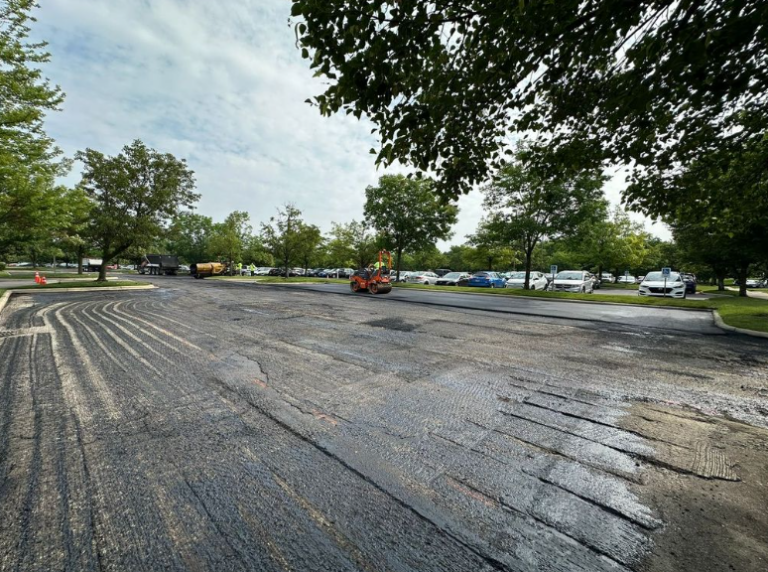
A good loading zone at an apartment community sits close to building entrances, has room for a moving truck to stop without blocking traffic or a fire lane, and is built on pavement strong enough for heavy vehicles. Clear markings, a smooth path to the door and simple rules for residents keep the area working on the busiest move-in days.
Without a designated area, moving trucks, delivery vans and furniture trucks end up double-parked in drive aisles, parked across stalls or idling in fire lanes. That creates frustration for residents and puts extra wear on pavement that was never designed for it.
Why Apartment Communities Need Dedicated Loading Areas
Apartment properties see a steady stream of large vehicles. Moving trucks come with every lease turnover, and turnover often clusters at the end of the month and through the summer. Package and appliance deliveries arrive daily.
A designated loading area helps in several ways:
- Traffic flow. Trucks have a place to stop that does not block drive aisles or other residents.
- Safety. Fire lanes and hydrants stay clear, and people carrying furniture are not walking through moving traffic.
- Pavement protection. Heavy vehicles stop and turn in an area built to handle them, instead of crushing the edges of stalls or curbs.
- Resident experience. New residents start their lease with an easier move, which shapes their first impression of the community.
Choosing the Right Location
The best spot is usually as close as practical to building entrances, stairwells or elevators, with a short, level path to the door. Think about how a resident with a hand truck or dolly will move from the truck to the building.
When picking a location, consider:
- How a box truck will pull in and leave without backing through a busy aisle.
- Whether the area keeps fire lanes, hydrants and building access clear at all times.
- Sight lines for drivers pulling out of nearby stalls.
- Where garbage trucks and delivery vans already travel, so the zone does not create new conflicts.
- Drainage, since a loading area in a low spot will hold water and ice right where people are carrying furniture.
Fire access rules vary, and a loading zone must never interfere with them. Check your plans with your local fire department and your city or township before marking a new area.
Building Pavement for Heavy Vehicles
Many apartment lots were designed mainly for cars. A loaded moving truck stopping, turning and sitting in the same spot puts much more stress on the pavement. Over time that can show up as ruts, cracking and edges that crumble where the truck tires sit.
Asphalt thickness and base
Loading areas typically need a stronger pavement section than parking stalls, with a properly compacted base underneath. Our article on choosing asphalt thickness for heavy traffic areas explains how thickness relates to the loads a pavement carries. The same issue affects dumpster approaches, as we discuss in how repeated garbage truck traffic affects apartment parking lots.
Concrete as an option
In some spots, a concrete pad is a better fit, especially where trucks sit with their weight in one place or where the area also serves as a pickup point for bulk trash. Our concrete services include pads, curbs and sidewalk connections for areas like this.
Timing the work
New paving and hot mix repairs are done roughly mid-April through early December in our region, when asphalt plants are open. Because move-in traffic is often heaviest in summer, many communities prefer to complete loading area work in spring or fall, and to phase the project so a temporary loading spot stays available.
Markings, Signs and the Path to the Door
A loading zone only works if drivers recognize it. Clear pavement markings such as hatched areas, the words “LOADING ZONE” painted on the surface and a defined boundary make it obvious. Signs with any time limits help with enforcement.
The route from the truck to the building matters as much as the zone itself:
- A curb ramp or flush transition lets dollies and hand trucks roll onto the sidewalk.
- Sidewalks should be level and free of trip edges between the zone and the door.
- Good lighting helps for evening deliveries and late moves.
- Door areas should have room to stage furniture without blocking the walkway.
Accessibility rules may also apply to curb ramps and the route to entrances. Confirm requirements with your city or township or a qualified professional.
Keeping Loading Areas in Good Shape
Loading zones see concentrated wear, so inspect them more often than the rest of the lot. Look for ruts, cracking where tires sit, broken edges and faded markings. Crack seal as soon as cracks appear, typically from spring through fall, and repaint markings when they start to fade.
Simple rules for residents help too. Many communities ask residents to schedule move-in times, limit how long a truck can stay, and keep the zone free of personal vehicles. Including those rules in move-in instructions avoids confusion on the busiest days.
Frequently Asked Questions
Can we use existing parking stalls as a loading zone?
Yes, a few stalls near an entrance can be restriped and signed as a loading area. Check that the pavement can handle truck traffic and that the change does not affect required parking counts or fire access.
Should the loading zone be painted a special color?
Many properties use hatched lines and stenciled words. If you are considering colored curbs, check with your fire department, since curb colors can have specific meanings for fire lanes.
Why is the pavement in our moving truck area rutting?
Heavy trucks stopping in the same spot can push the asphalt out of shape, especially in warm weather or where the base is weak. A stronger pavement section or a concrete pad may be needed.
Vandalia Blacktop & Sealcoating has helped apartment communities in Dayton, Englewood and across the Miami Valley improve their parking areas since 1975. If move-in days at your property feel like a traffic jam, contact us or call (937) 454-0571 to plan a loading area that works.