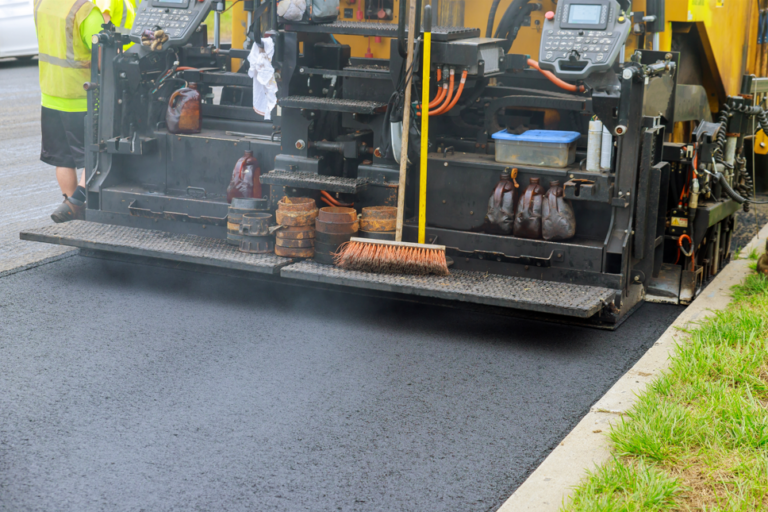
Paving a steep or sloped driveway takes more planning than a flat one, mainly around drainage, base preparation, compaction and the transitions at the street and garage. Asphalt works well on hills, but the slope changes how water moves, how the crew places and rolls the mix, and how the finished surface handles traffic and winter weather.
If your home sits above or below the road, as many do in the rolling parts of Centerville, Beavercreek and Englewood, here is what to think about before the work begins.
Plan Where the Water Will Go
On a sloped driveway, every drop of rain that lands on the pavement heads downhill, and it picks up speed along the way. Where it ends up matters more than anything else in the design.
Driveways that slope toward the house
When the driveway runs downhill toward the garage, water can collect at the garage door, seep under it, or soak into the base right where the pavement meets the slab. Common solutions include shaping the surface so water is directed off to the side before it reaches the garage, or installing a trench drain across the bottom that carries water to a safe outlet. Which approach works depends on the site, the soil and where the water can legally and practically go.
Driveways that slope toward the street
A driveway that drops toward the road usually sheds water more easily, but runoff can wash gravel and soil onto the pavement and carry debris to the street. Ditches, culverts and curb openings at the bottom need to handle the flow without undermining the apron.
Our drainage and site preparation work is often the most important part of a sloped driveway project, because a well-paved surface will still fail if water keeps getting under it.
Build a Stronger Base
A slope puts extra stress on the layers under the asphalt. Water moving through the soil, vehicles braking on the way down and tires spinning on the way up all push on the base. A weak or poorly compacted base on a hill tends to show problems quickly, such as cracking, settling and edges that crumble.
Good preparation usually means removing soft or organic soil, installing and compacting crushed stone in layers, and stabilizing poor soils where needed. Soil stabilization can be especially helpful when clay soils stay wet on a hillside. For a deeper look at why this step matters, see our article on proper subgrade preparation before any paving project.
Thickness and compaction on a grade
Compacting asphalt on a slope is harder than on flat ground. The mix wants to shift downhill under the roller, and the crew has to work carefully to get full density without pushing the material out of shape. Experienced crews plan the paving direction and rolling pattern around the slope. Ask your contractor how they handle compaction on grades and what thickness they recommend for your traffic.
Get the Transitions Right
The two places a sloped driveway most often goes wrong are where it meets the street and where it meets the garage.
- At the street. A sharp change in angle between the road and a steep driveway can make cars scrape bumpers or drag the underside. A smoother transition at the apron helps. Many cities and townships also have rules about driveway aprons in the public right of way, so confirm requirements with your local engineering or zoning office before work starts.
- At the garage. The asphalt should meet the garage slab cleanly, without a lip that catches tires or a dip that holds water. If the concrete apron in front of the garage is cracked or sunken, it may make sense to address it at the same time with concrete repair.
Think About Traction and Safety
Steep driveways are where traction matters most, both for cars and for people walking to the mailbox or carrying groceries. A properly compacted asphalt surface has good texture when new. Over time, the surface can become smoother as it weathers and wears.
When the driveway is sealcoated later, ask the contractor about adding sand to the sealer and applying thin coats to keep the surface from becoming slick. On very steep sections, it is also worth thinking about where people will walk and whether a handrail, steps or a separate path would make sense.
Winter considerations
Ice is the biggest seasonal concern on a hill. Make sure downspouts and yard runoff do not send water across the driveway where it can freeze. Plan where plowed or shoveled snow will be piled so meltwater drains away from the pavement instead of refreezing across it overnight.
Protect the Edges
Edges on a sloped driveway are vulnerable because water runs along them and soil next to the pavement can wash away. Without support, the asphalt edge can crack and break off. Backfilling and compacting soil against the edges after paving, establishing grass or stone along the sides, and keeping heavy vehicles off the edges all help. Our article on why asphalt edges fail goes into more detail.
Timing and Scheduling
New driveways are paved with hot mix asphalt, and the plants in our region are typically open from about mid-April through early December, weather permitting. That is the window for installation. Planning over the winter is a smart move, since it gives you time to get estimates, check local requirements and line up a spot on the schedule for spring or summer.
Once the driveway is paved, give it time to cure before heavy use, and avoid sharp turns of the steering wheel while parked, which can scuff fresh asphalt on a slope. Your contractor will give you guidance on when it is ready.
Frequently Asked Questions
Can asphalt be used on a very steep driveway?
Yes, asphalt is commonly used on sloped driveways. The key is solid base preparation, careful compaction and a drainage plan that keeps water from running under the pavement or into the garage.
Do I need a drain at the bottom of my driveway?
If the driveway slopes toward the garage or another low spot where water collects, a trench drain or other drainage feature is often recommended. A site visit is the best way to tell.
Will my car scrape at the end of a steep driveway?
It can if the transition to the street is too abrupt. A contractor can shape the apron to smooth the change in angle, within the limits of your local requirements.
Is a sloped driveway more expensive to pave?
Sloped driveways often need more base and drainage work, which can affect the scope of the job. An on-site estimate will show what your specific property needs.
Vandalia Blacktop & Sealcoating has been paving residential driveways across the Miami Valley since 1975, including plenty on hills. Contact us or call (937) 454-0571 to schedule an estimate and talk through the plan for your sloped driveway.